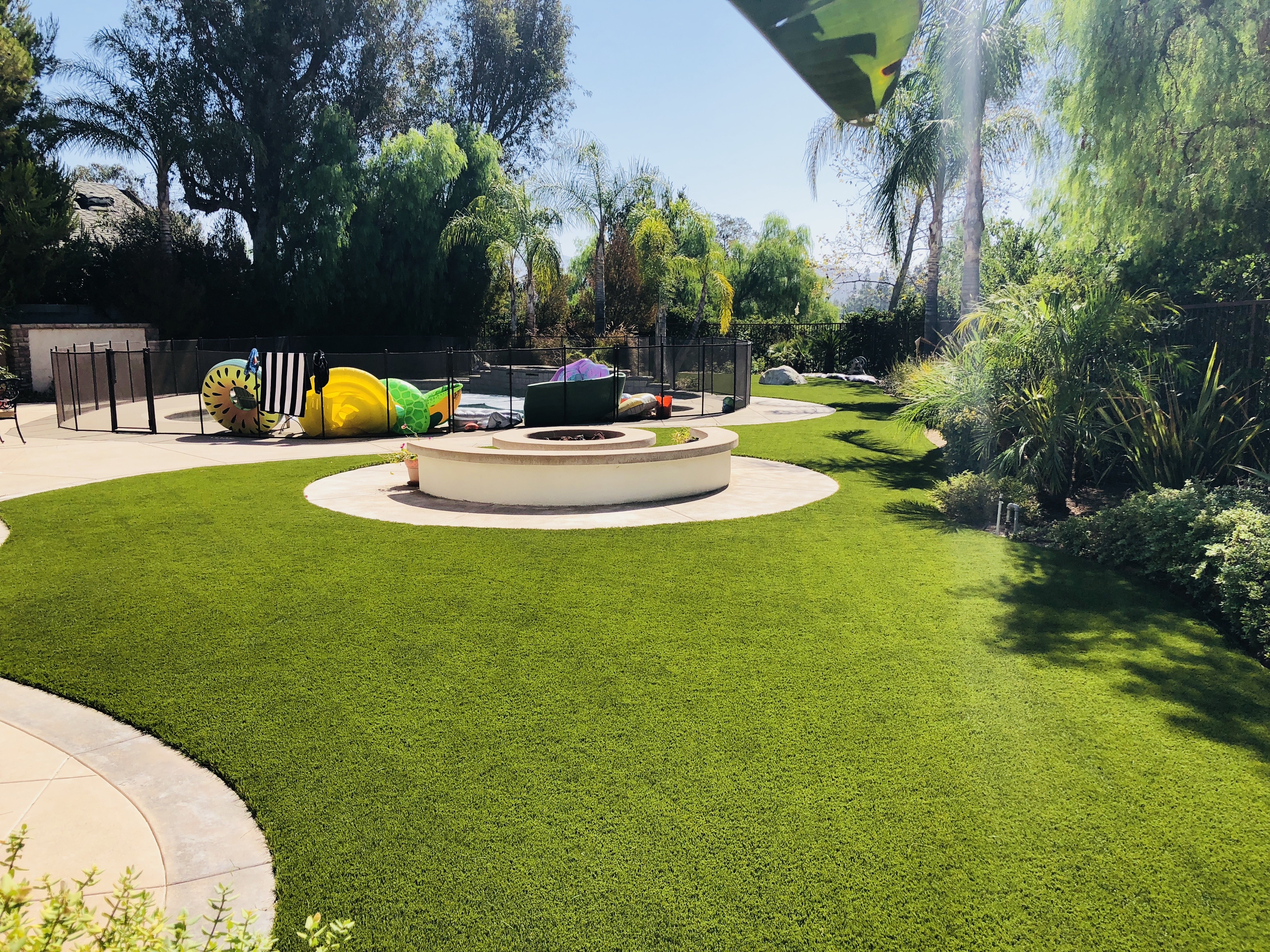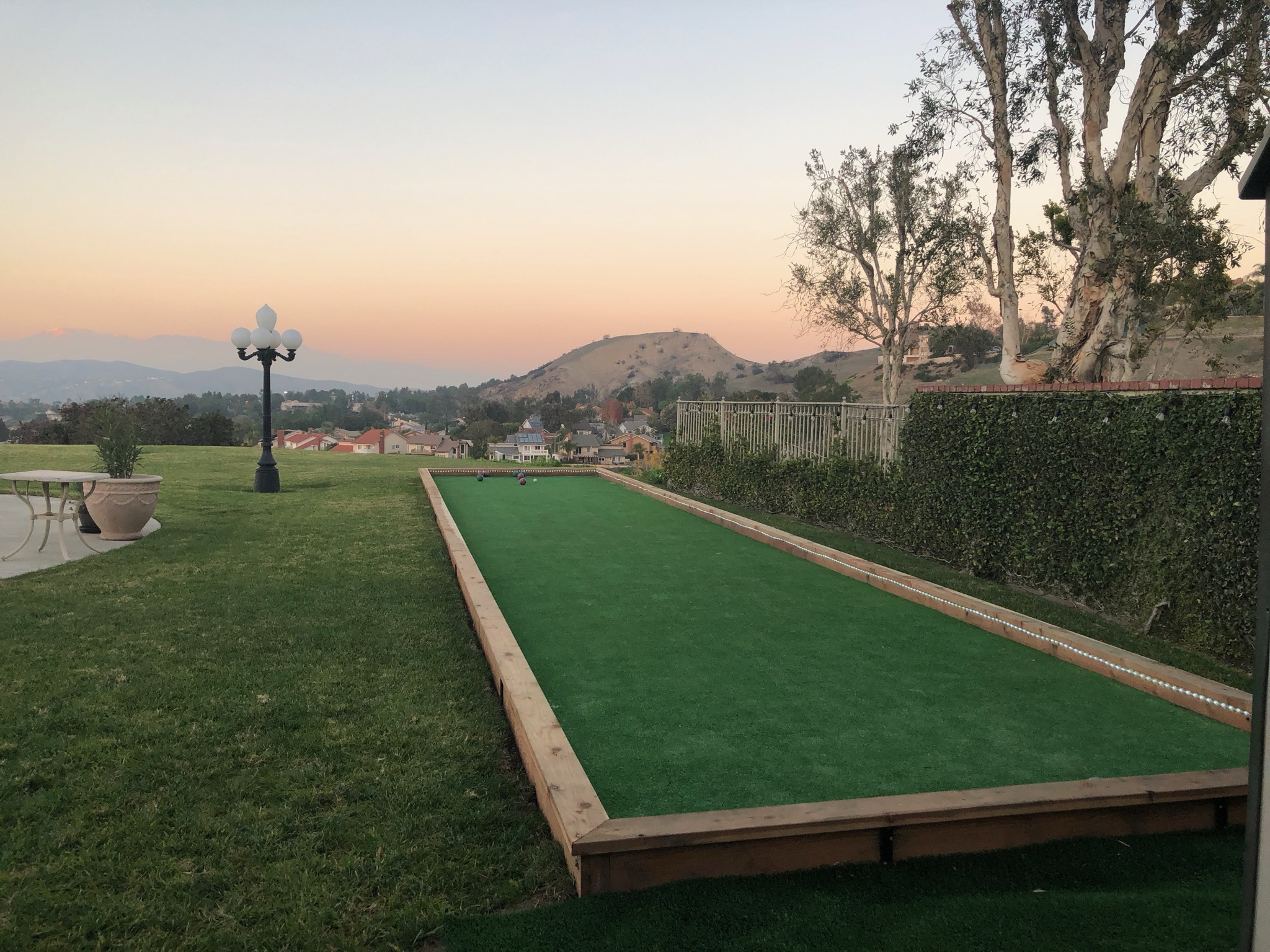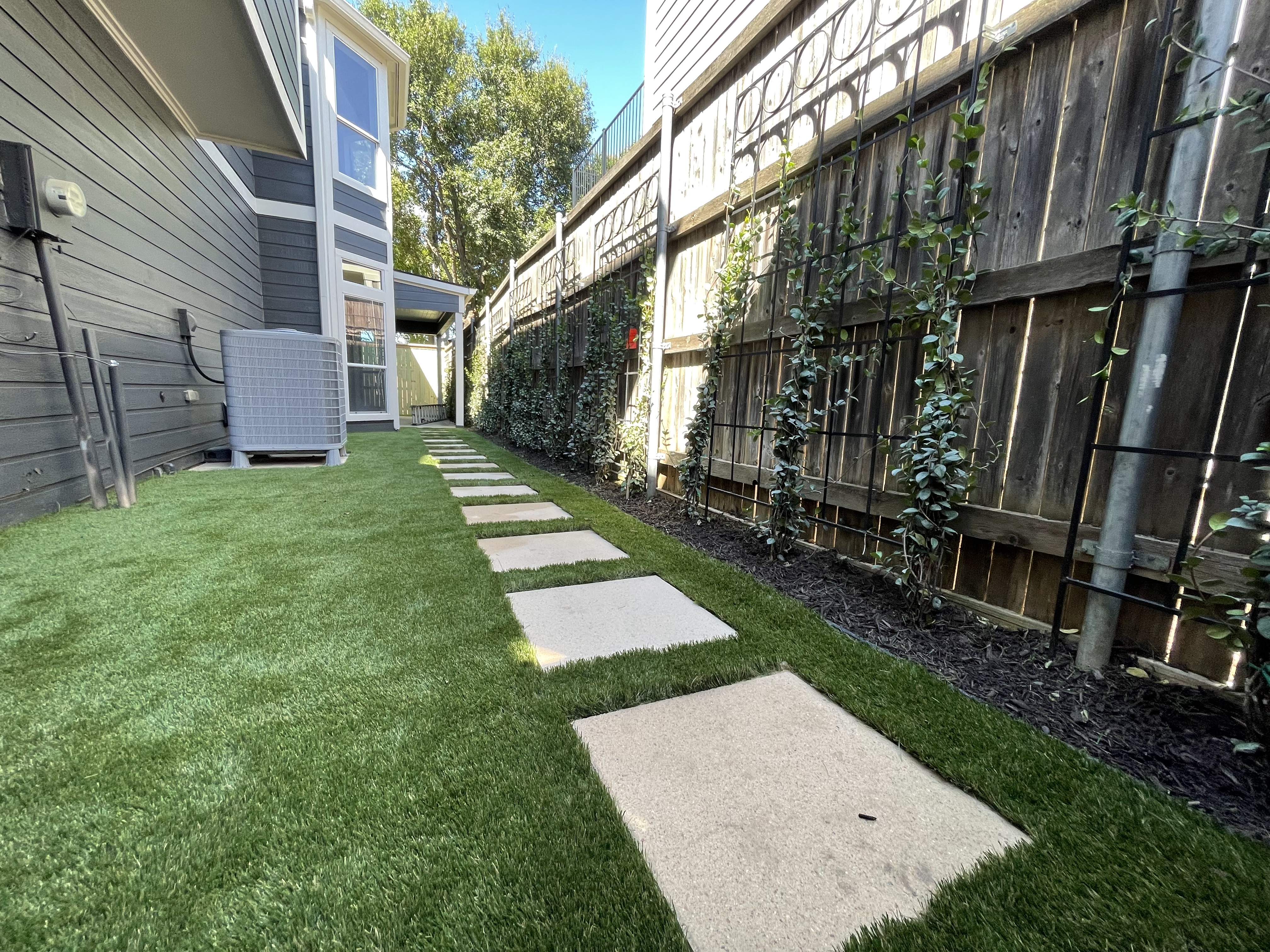
You don’t have to go all-or-nothing. Plenty of homeowners across North Texas use artificial grass next to real grass — and it looks great when it’s done right.
Maybe you want turf in the backyard and natural grass in the front. Or a pet run along the side yard bordered by your existing lawn. Whatever the setup, here’s how to make it work and what to expect.
Why People Mix Turf and Natural Grass
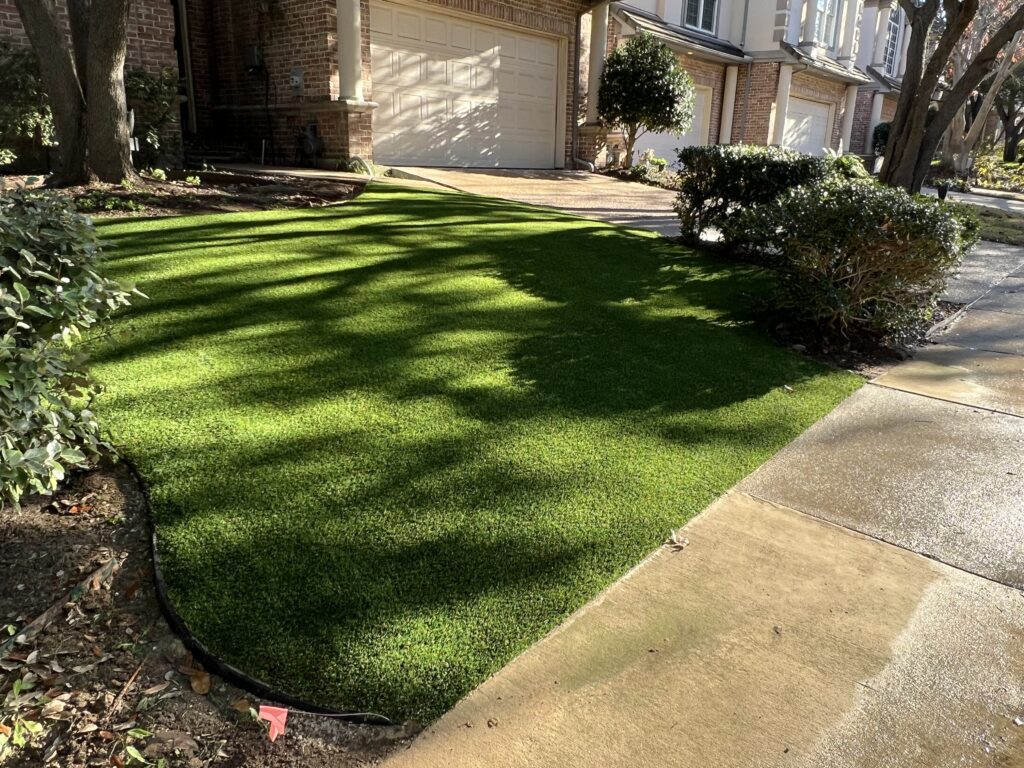
The most common reason is practical. Different parts of your yard serve different purposes, and different surfaces handle those purposes better.
Backyards take a beating. Kids, dogs, parties, daily foot traffic. Bermuda grass in a heavily used North Texas backyard turns into a mud pit by August. Artificial turf handles all of that without flinching.
Front yards are mostly visual. They get mowed once a week and walked on occasionally. Some homeowners prefer to keep natural grass in front because they like the look, the feel, or they simply don’t need turf in an area that doesn’t get heavy use.
Side yards and dog runs are another common split. A narrow strip of turf along the side of the house creates a clean, mud-free pet area while the main lawn stays natural.
None of these setups look weird or patchwork. The key is in the transition.
The Transition Edge Is Everything
Where artificial grass meets real grass, you need a clean, defined border. Without one, the natural grass creeps into the turf edge, the turf edge lifts, and the whole thing looks like an accident.
There are a few edging options that work well.
Aluminum or Steel Edging
This is the most common solution for a turf-to-grass border. A narrow metal edge — usually aluminum or galvanized steel — is staked into the ground between the two surfaces. It creates a clean line that keeps the natural grass roots from spreading under the turf and keeps the turf edge locked in place.
From above, you barely see it. It just looks like a natural boundary between the two surfaces.
Paver or Stone Border
For a more designed look, a row of pavers or natural stone between the turf and grass creates an intentional visual break. This works especially well around patios, fire pits, or any area where you’re already incorporating hardscape.
Green Forever Turf Texas installs both artificial turf and pavers, so if you want a paver border between your turf and grass zones, it all gets built together as one project.
Concrete Mow Strip
If you already have a concrete mow strip separating your lawn from beds or walkways, you can use it as the transition line. The turf butts up against one side, the grass grows up to the other. Clean and simple.
Matching the Color
Here’s where people get nervous. Will the artificial turf look obviously fake next to real grass?
It depends on two things: the turf product you choose and the time of year.
Quality turf products come in a range of green shades. Some have brown thatch woven in for a more natural look. The right installer will help you pick a shade that complements your natural grass variety — which in most of DFW is Bermuda or St. Augustine.
In spring and early summer, when Bermuda grass is at its greenest, a well-matched turf blends in naturally. The transition is subtle.
In late summer and fall, things diverge. Bermuda starts to brown and go dormant. Your artificial turf stays green. That contrast becomes obvious.
Some homeowners love this. Their turf area looks perfect year-round while the rest of the neighborhood browns out. Others see it as motivation to eventually convert the whole yard.
Be honest with yourself about which camp you’ll fall into. The color contrast in November is real.
Common Setups That Work
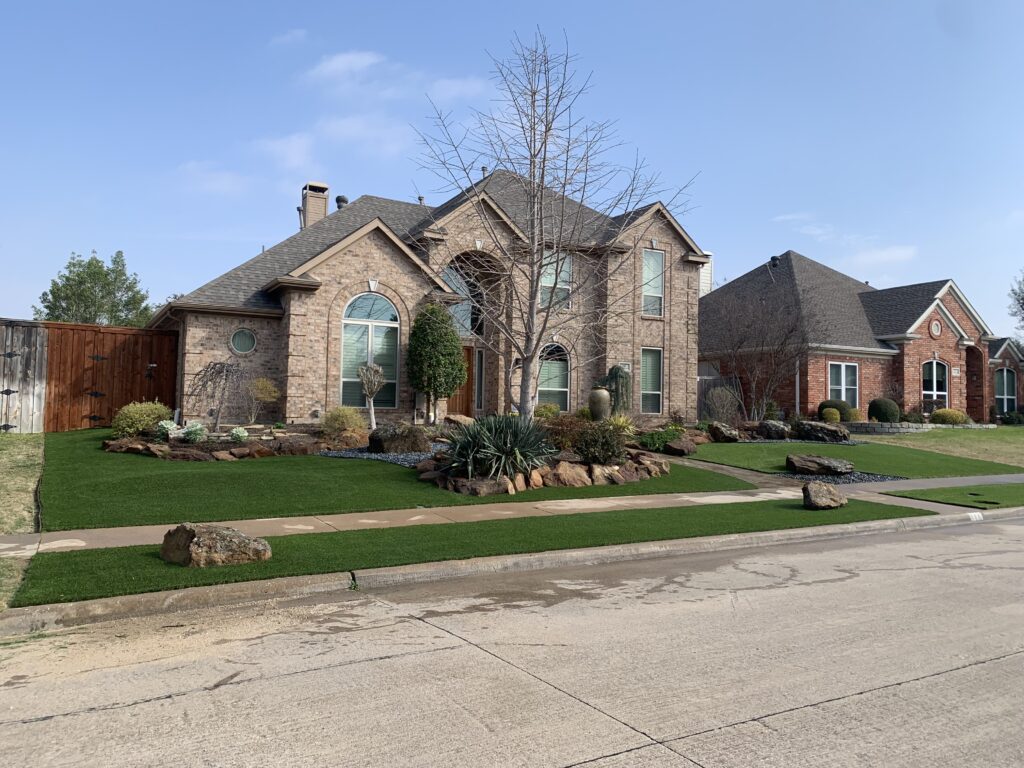
Turf Backyard, Natural Grass Front
This is the most popular combination in Frisco, McKinney, Flower Mound, and Prosper. The backyard does the heavy lifting — dogs, kids, entertaining — so it gets turf. The front yard stays natural for curb appeal and the look of a traditional lawn.
The transition usually happens at a fence line or gate, so the two surfaces are never actually side by side. This makes the color matching irrelevant.
Turf Pet Area Next to Natural Lawn
A dedicated pet turf zone along the side yard or in a corner of the backyard is a smart setup for dog owners. The turf handles waste, drains fast, and doesn’t turn to mud. The rest of the yard stays natural for the humans.
A metal or paver edge between the two zones keeps everything separated. The dog area stays clean, the lawn stays intact.
Turf Play Area Surrounded by Natural Grass
Some homeowners install a turf “island” in the middle of their yard — a play surface for kids surrounded by natural grass. It works well for swing sets, trampolines, and play structures where the ground underneath gets destroyed.
Edging the perimeter with bender board or aluminum keeps the turf defined. The natural grass grows right up to the edge.
Turf Side Yard, Natural Grass Main Lawn
Side yards in DFW are often narrow, shaded, and neglected. Grass struggles there anyway because of limited sunlight and foot traffic from gates and trash cans. Turf in the side yard eliminates the mud and maintenance while the main lawn gets sunshine and stays green on its own.
Maintenance Differences Side by Side
Here’s something to prepare for: your maintenance schedule splits in two.
The natural grass still needs mowing, watering, fertilizing, and seasonal treatment. That doesn’t change.
The turf side needs occasional rinsing, brushing, and debris removal. It takes minutes, not hours. You’ll notice the difference in effort immediately, and it might make you question why you’re still mowing anything at all.
Plenty of homeowners start with a partial conversion and end up going full turf within a year or two. Once you live with both side by side, the maintenance gap becomes hard to ignore.
Will the Turf Side Drain Into the Grass Side?
Good question. Quality turf drains at 400 inches per hour — far faster than natural grass. If both zones are graded properly, water moves through the turf into the base layer and dissipates into the ground below.
In most setups, the turf area actually drains better than the grass area. That’s especially true in DFW’s clay soil, where the engineered base under the turf outperforms the native soil every time.
Just make sure the grading between the two zones doesn’t direct turf runoff onto the grass in a way that creates pooling. A good installer accounts for this during the planning stage.
One More Thought
Mixing artificial grass next to real grass isn’t a compromise. It’s a smart way to put the right surface in the right spot. High-traffic zones get turf. Low-maintenance zones keep natural grass. The border between them stays clean with proper edging.
And if the day comes when you decide to convert everything? That’s an easy conversation to have.
Ready to see what artificial turf can do for your yard? Call us at 844-91-GREEN (844-914-7336) or request a free quote.