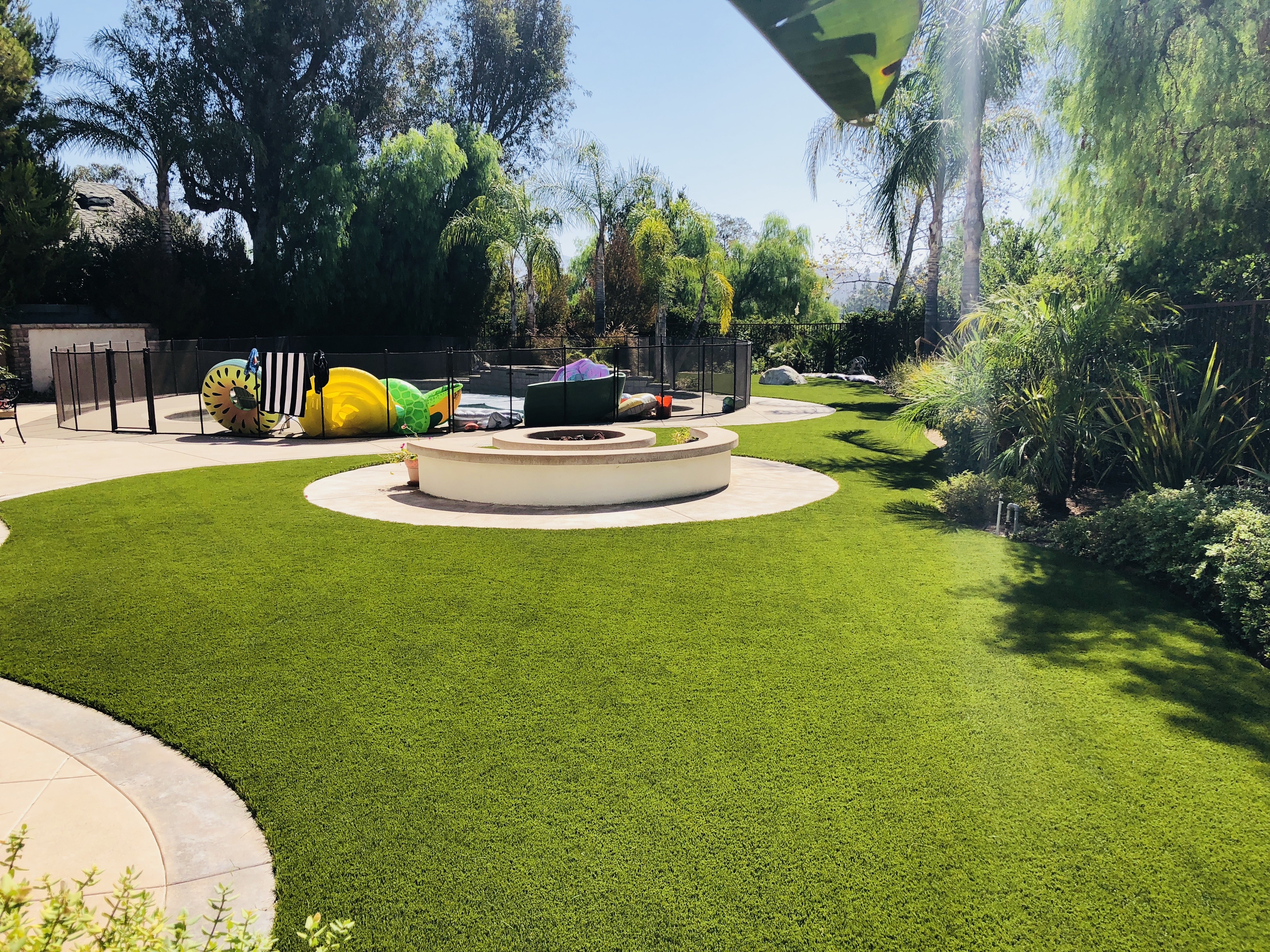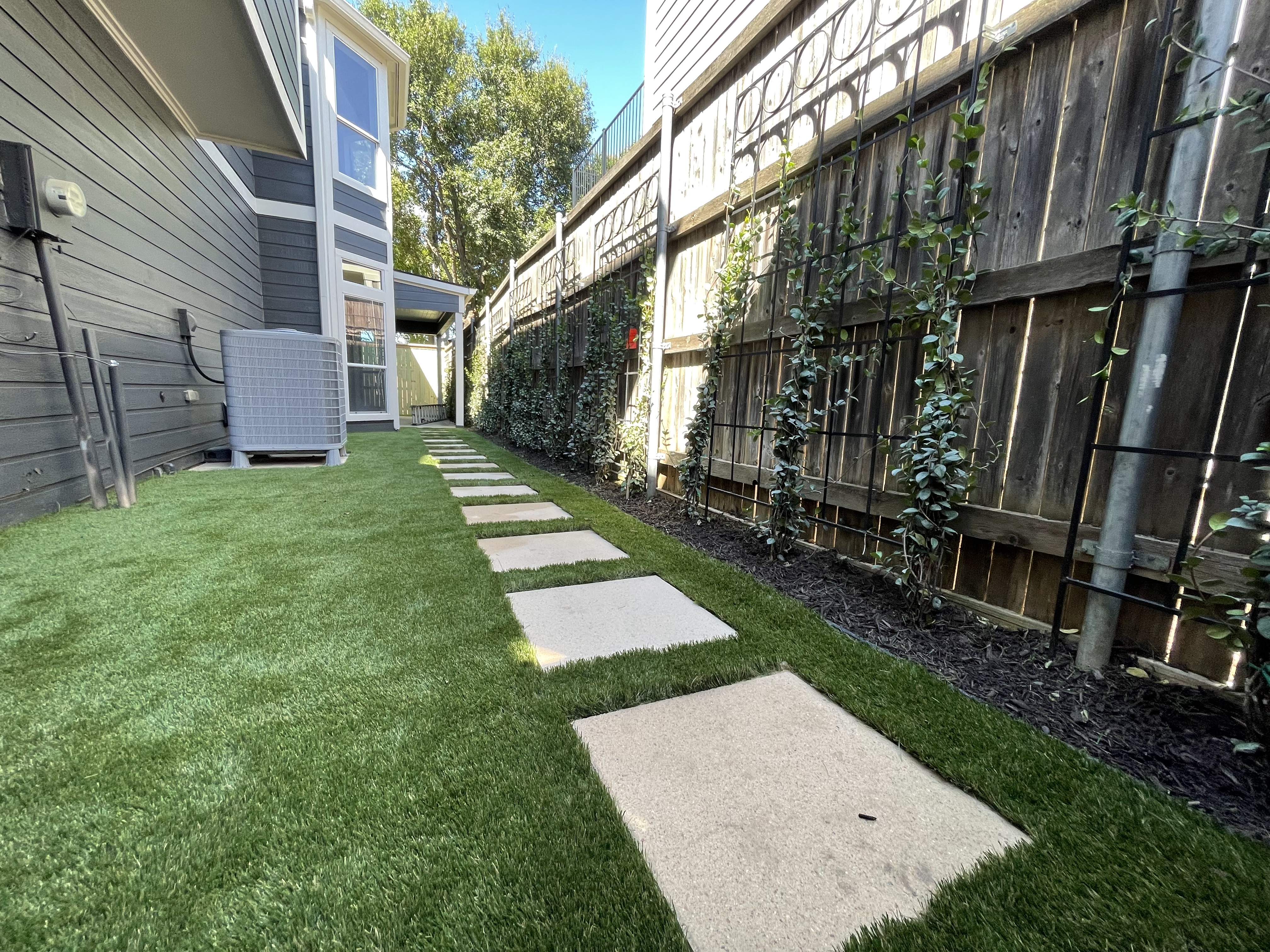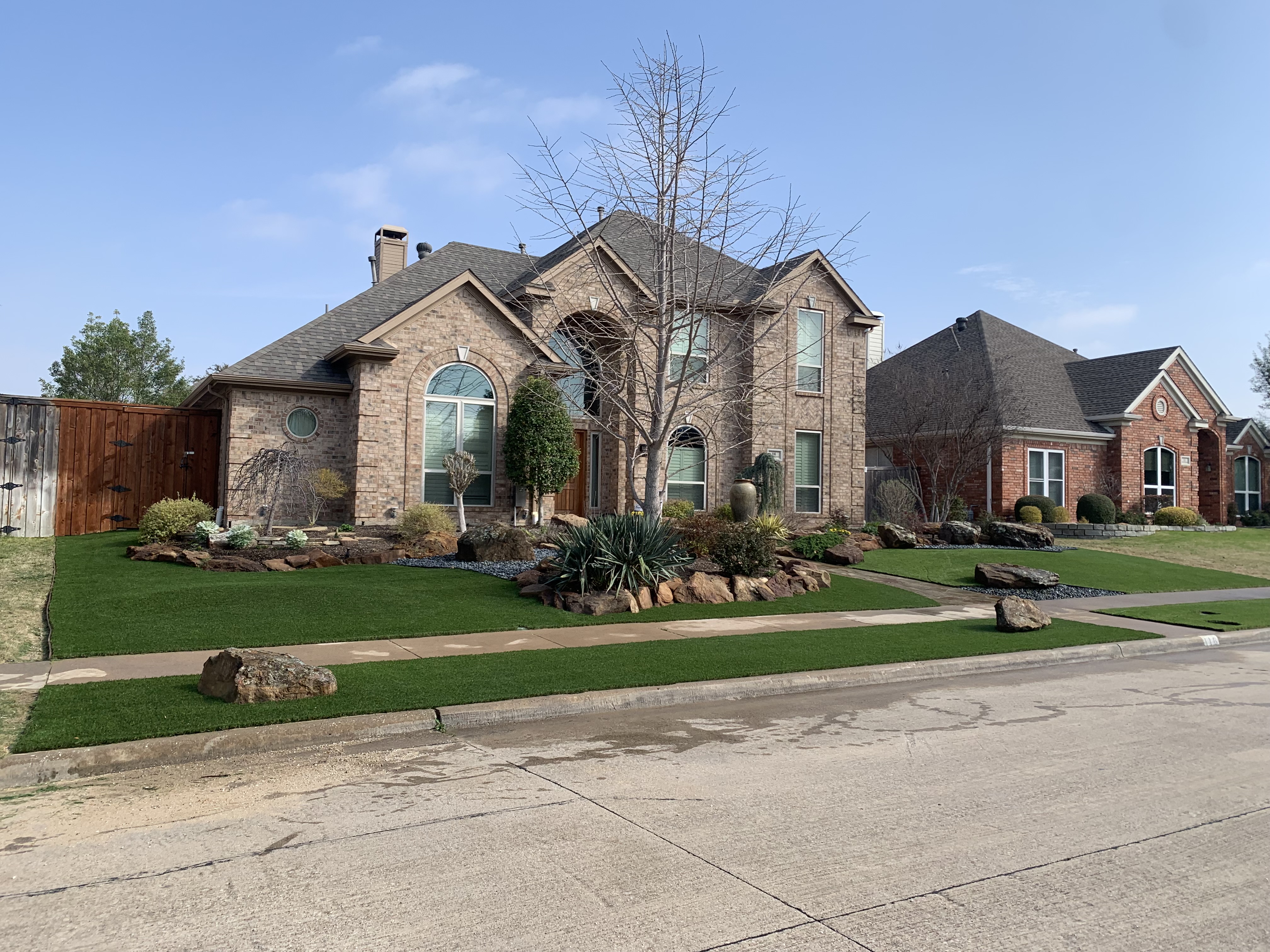
This isn’t a one-sided pitch. If you’re comparing artificial turf vs real grass for your DFW yard, you deserve a fair breakdown — the advantages and trade-offs on both sides.
Here’s the honest comparison, category by category.
Upfront Cost
Real grass is cheaper to install. Bermuda sod in North Texas runs about $0.80 to $1.50 per square foot for materials, plus labor for installation. A 1,000 sq ft lawn might cost $1,500 to $3,000 to sod.
Artificial turf runs $8 to $15 per square foot fully installed, including base prep, materials, labor, and infill. That same 1,000 sq ft area costs $8,000 to $15,000.
On day one, real grass wins the price comparison by a wide margin. But day one is only part of the story. For a deeper dive on turf pricing, check out our full artificial turf cost guide for Texas, or see the artificial turf installation services we offer across the DFW Metroplex.
Ongoing Cost
This is where the comparison flips.
Real grass annual costs in DFW:
A lawn service runs $150 to $250 per month during the growing season. Watering during a North Texas summer adds $80 to $200+ per month to your water bill. Fertilizer, weed treatment, and pest control add $400 to $1,100 per year. Re-sodding patchy areas — and in DFW, Bermuda always has patchy areas — adds $200 to $500 every year or two.
Conservative annual total: $2,500 to $5,900.
Artificial turf annual costs: Occasional infill top-up every few years. That’s roughly $50 to $100 per year amortized.
Over 10 years, real grass costs $25,000 to $59,000 in maintenance. Over 15 years — the length of a standard turf warranty — that’s $37,500 to $88,500.
Turf breaks even in 2 to 4 years for most North Texas homeowners.
Maintenance Time
Real grass in DFW requires mowing weekly (sometimes twice a week in peak growing season), edging, watering on a strict schedule, seasonal fertilizing, weed pulling, and fall aeration. Call it 3 to 5 hours per week during spring and summer.
Artificial turf needs a brushing once or twice a month, an occasional rinse, and debris removal. Budget 20 to 30 minutes per week. Our turf maintenance guide covers the full routine.
That’s the difference between losing your Saturday mornings and barely thinking about your yard.
Water Usage
This is a big one in Texas.
Maintaining a natural lawn in DFW uses an estimated 25,000 to 50,000 gallons of water per year, depending on yard size and irrigation efficiency. During drought conditions, those numbers go up as you try to keep Bermuda alive through mandatory watering schedules.
Artificial turf uses zero irrigation water. You’ll rinse it occasionally with a hose, but the water usage is negligible compared to maintaining a living lawn.
In a state that cycles through drought restrictions every few years, eliminating lawn irrigation is a real financial and practical advantage.
Appearance
Real grass looks beautiful in spring — for about two months. Bermuda goes dormant and turns brown from late fall through early spring. It struggles in shade. It thins out under heavy foot traffic. It gets patchy after a hard summer.
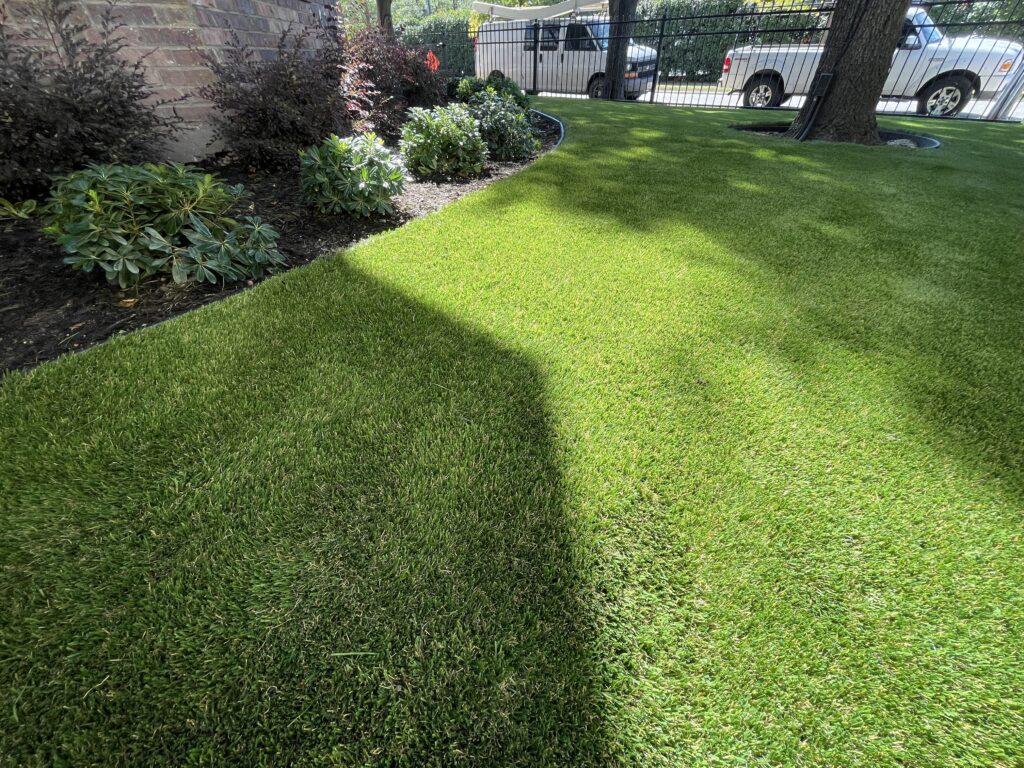
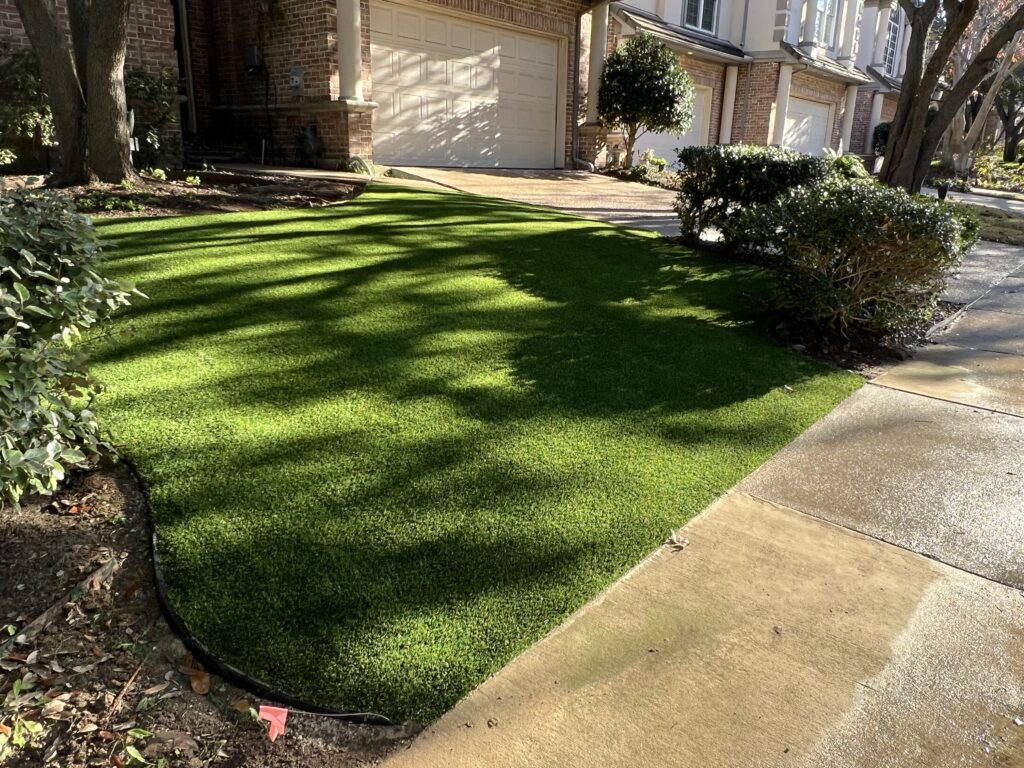
Artificial turf looks the same 365 days a year. Consistent color, consistent density, consistent height. No brown patches. No bare spots. No seasonal dormancy.
Is it identical to natural grass? No. Up close, you can tell the difference. But from 10 feet away, quality turf looks remarkably natural — especially products with brown thatch fibers woven in to mimic real grass coloring.
The honest trade-off: natural grass has a texture and smell that turf doesn’t replicate. If barefoot-in-the-morning-dew is a core part of your backyard experience, that’s worth noting.
Durability
Bermuda grass is one of the tougher warm-season grasses, which is why it’s the DFW standard. But “tough” is relative. A few weeks of heavy use — kids, dogs, a trampoline — and you’ve got worn paths and bare spots. Bermuda recovers, but slowly. And it needs sunshine to do it, which is why shaded areas stay thin.
Artificial turf handles daily abuse without showing wear. Dogs can run on it all day. Kids can play on it every afternoon. You can host a party for 50 people and it looks the same the next morning.
Quality turf comes with a 15-year warranty. Bermuda needs re-sodding every 5 to 8 years in high-use areas.
Heat
Here’s where we keep it honest.
Artificial turf gets warm in direct sunlight. On a 100°F Texas afternoon, an unshaded turf surface can reach 120°F to 150°F. That’s noticeably hot on bare feet.
Modern turf products include cooling technology that reduces surface temperatures by up to 20% compared to traditional turf. That helps, but it doesn’t make turf cool to the touch in August.
Real grass stays cooler through evaporative cooling — the water it absorbs and releases keeps the surface temperature closer to the air temperature. On that same 100°F day, grass might be 80°F to 90°F.
The reality check: Most people use their DFW backyards in the mornings, evenings, and under shade structures — not at 2 PM in direct July sun. Shaded turf stays comfortable. A quick rinse with a hose cools the surface immediately.
If your yard is fully unshaded and you plan to be barefoot in peak afternoon sun, this is a genuine consideration.
Environmental Impact
This one is nuanced. Neither option is perfectly “green.”
Real grass uses significant water, requires fertilizer and pesticides (which run off into waterways), needs gas-powered equipment for mowing and edging, and produces emissions from lawn maintenance equipment.
Artificial turf is a synthetic product. It’s made from plastics and petroleum-based materials. It doesn’t biodegrade at end of life (though recycling programs are growing). On the other hand, it eliminates water use, eliminates chemical applications, and eliminates equipment emissions for its entire lifespan.
The products we install at Green Forever Turf Texas are non-toxic, PFAS-free, lead-free, and heavy metal-free. The Alpha Pet Pro-Eco product is fully recycled material. These aren’t the turf products of 20 years ago.
There’s no clear winner here. It depends on which environmental factors you weigh most heavily.
The Clay Soil Factor
DFW sits on clay soil. That affects this comparison more than most guides acknowledge.
Clay soil makes natural grass harder to maintain. It compacts easily, drains poorly, and creates conditions where Bermuda struggles. You need regular aeration, extra watering, and constant attention to keep grass healthy in clay.
Clay soil makes proper turf installation more important. The engineered base layer under artificial turf replaces clay’s drainage problems with a system that moves water efficiently. A professionally installed turf yard on clay soil actually drains better than the natural grass it replaced.
In other words, the very soil conditions that make North Texas lawns difficult to maintain are the same conditions that make artificial turf a strong alternative.
Property Value
Curb appeal matters in the DFW real estate market. A lush, green front yard — whether natural or artificial — helps. A brown, patchy lawn hurts.
Artificial turf has become common enough in Frisco, Plano, McKinney, Southlake, Prosper, and Flower Mound that buyers view it as a feature, not a novelty. Low-maintenance outdoor space is a selling point.
That said, some buyers strongly prefer natural grass. It’s a personal preference. If resale is a primary concern, consider keeping natural grass in front and turf in back — the best of both worlds.
The Verdict
For most North Texas homeowners, artificial turf wins the long-term comparison. Lower total cost, dramatically less maintenance, zero water usage, year-round appearance, and superior durability.
The trade-offs are real: higher upfront cost, warmth in direct summer sun, and a synthetic feel underfoot. Those matter to some people, and that’s a legitimate choice.
But if you value your time, your water, and a yard that looks perfect without constant work, artificial turf is the stronger play.
Ready to see what artificial turf can do for your yard? Call us at 844-91-GREEN (844-914-7336) or request a free quote.