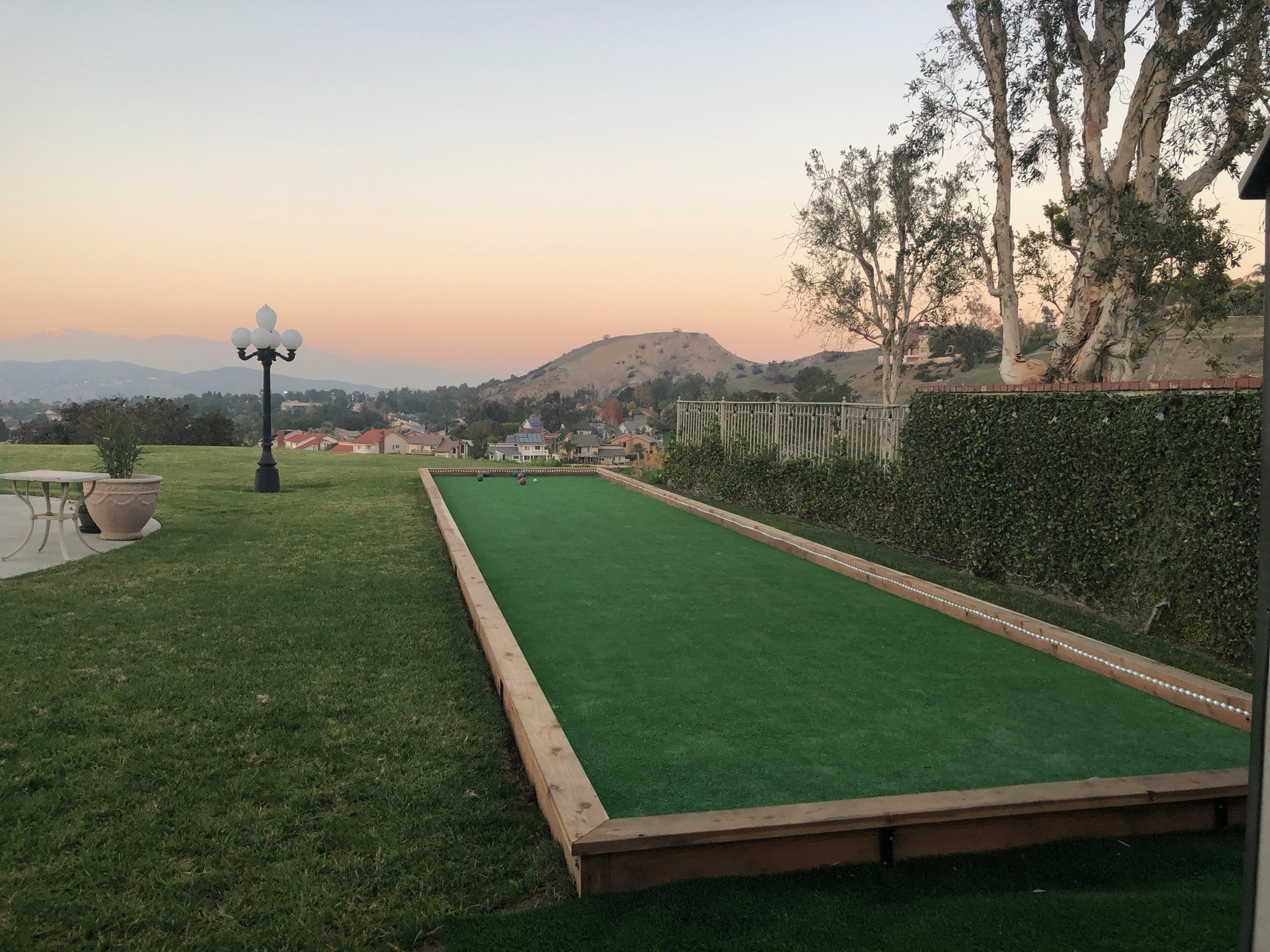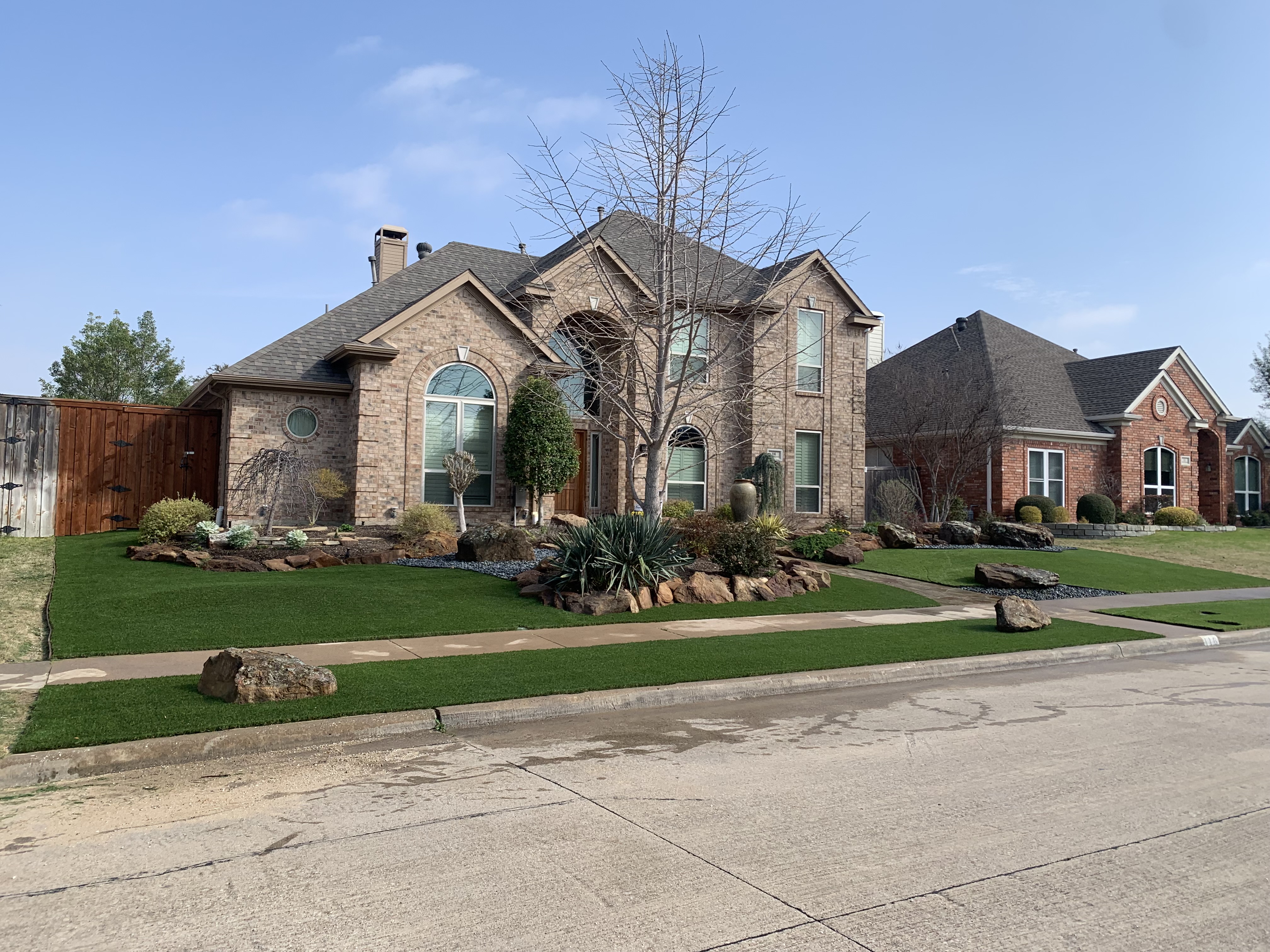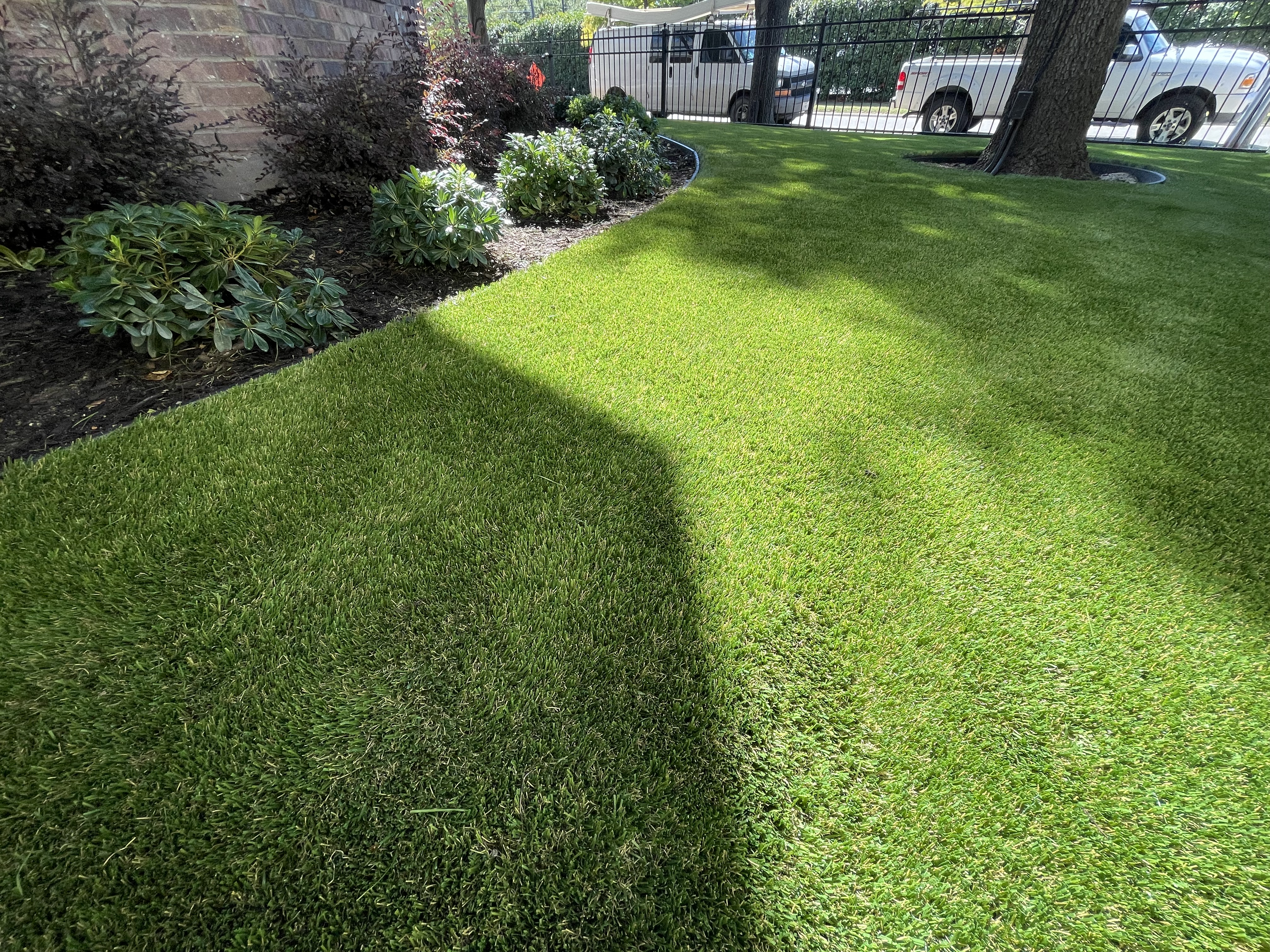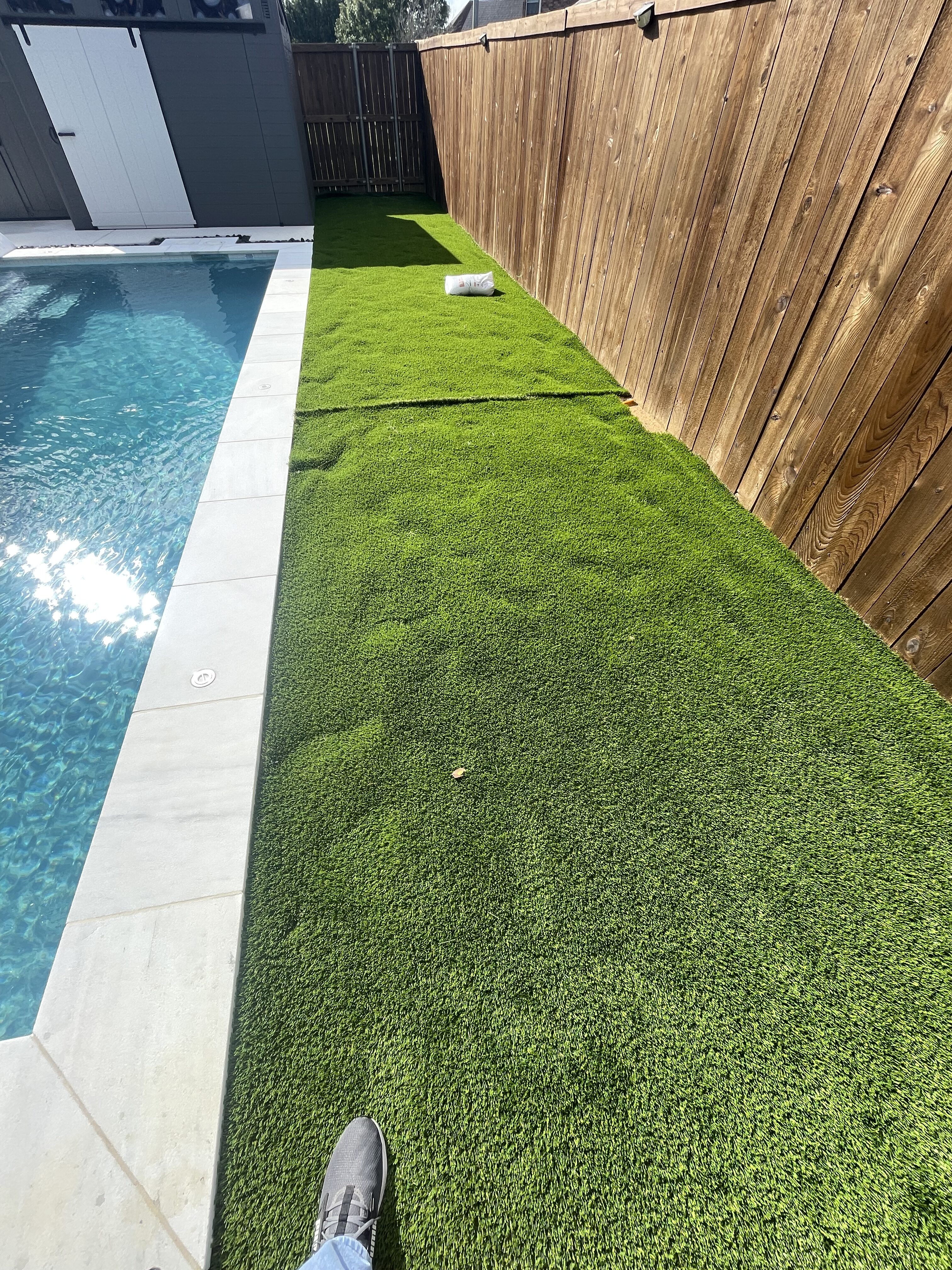
You already know what artificial turf looks like. You know the basic pitch — no mowing, no watering, always green. What you probably want right now is someone to lay out the real numbers, the real trade-offs, and a straight answer.
Here it is: for most North Texas homeowners, artificial turf is worth it. But not for every single person, and not without understanding what you’re getting into. Let’s break it down.
The Money Side
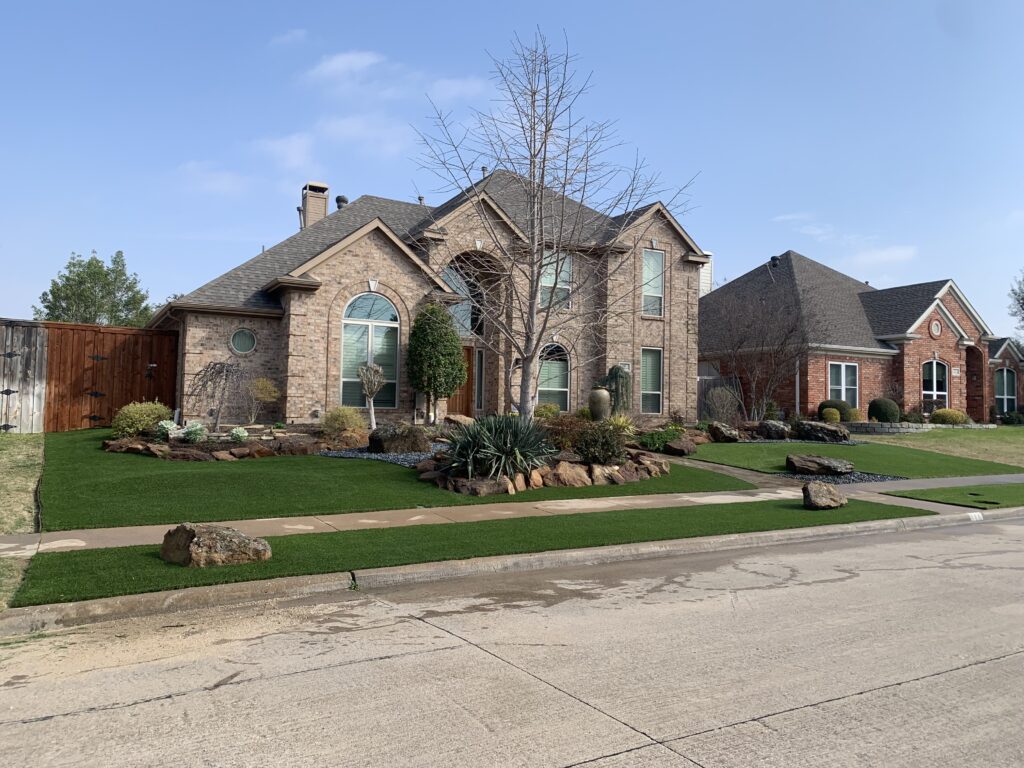
Artificial turf is an investment. It costs more upfront than sodding a lawn, and there’s no way around that. A typical DFW backyard installation runs $8 to $15 per square foot — materials, base prep, labor, infill, and edging all included. For a 1,000 sq ft yard, you’re looking at $8,000 to $15,000.
That’s a real number. It’s not impulse-buy territory. So what do you get for it?
You stop paying for lawn care. Mowing, edging, fertilizer, weed treatment, pest control, aeration, re-sodding — all of it goes to zero. In North Texas, those costs add up to $2,500 to $5,900 per year for a typical residential lawn.
You stop paying for lawn water. This is the one that sneaks up on people. Watering a lawn through a DFW summer can add $80 to $200+ per month to your water bill. Multiply that by the 6 to 8 months of the year when irrigation is running, and you’re looking at $600 to $1,500 annually in water costs alone.
The break-even point: Most homeowners break even in 2 to 4 years. After that, every dollar you would have spent on lawn maintenance is money in your pocket.
Over the 15-year warranty period of a quality installation, the savings compared to natural grass maintenance total $37,500 to $88,500. Even at the most conservative estimates, turf pays for itself several times over.
Our full cost breakdown for Texas walks through every line item if you want the detailed numbers, and our artificial turf installation page covers what we do across DFW.
The Time Side
Here’s the part that doesn’t show up on a balance sheet but matters just as much.
A natural lawn in DFW demands 3 to 5 hours per week during the growing season. Mowing, edging, watering, pulling weeds, dealing with dead spots. That’s every week, March through November.
Artificial turf needs about 20 to 30 minutes per week. A quick brush, an occasional rinse, some debris removal. That’s it.
Over a year, you’re getting back roughly 150 to 200 hours. That’s five full weeks of waking hours that you’re currently spending on grass.
What would you do with five extra weeks per year? Play with your kids. Practice your short game. Grill. Sleep in on Saturdays. Whatever it is, it’s better than pushing a mower in 103°F heat.
Property Value
Does turf help or hurt your home value?
In the DFW market — Frisco, Plano, McKinney, Southlake, Prosper, Flower Mound, and across the Metroplex — artificial turf has become a recognized feature, not a novelty. Buyers see it as a low-maintenance, move-in-ready upgrade that saves them money from day one.
A consistently green, well-maintained yard creates strong curb appeal year-round. No dormant brown Bermuda in winter. No patchy spots in August. No sprinkler heads to dodge when showing the house.
That said, a small segment of buyers strongly prefer natural grass. It’s personal preference. If resale flexibility matters to you, consider keeping natural grass in the front yard while converting the back. You get the best of both worlds.
Quality of Life
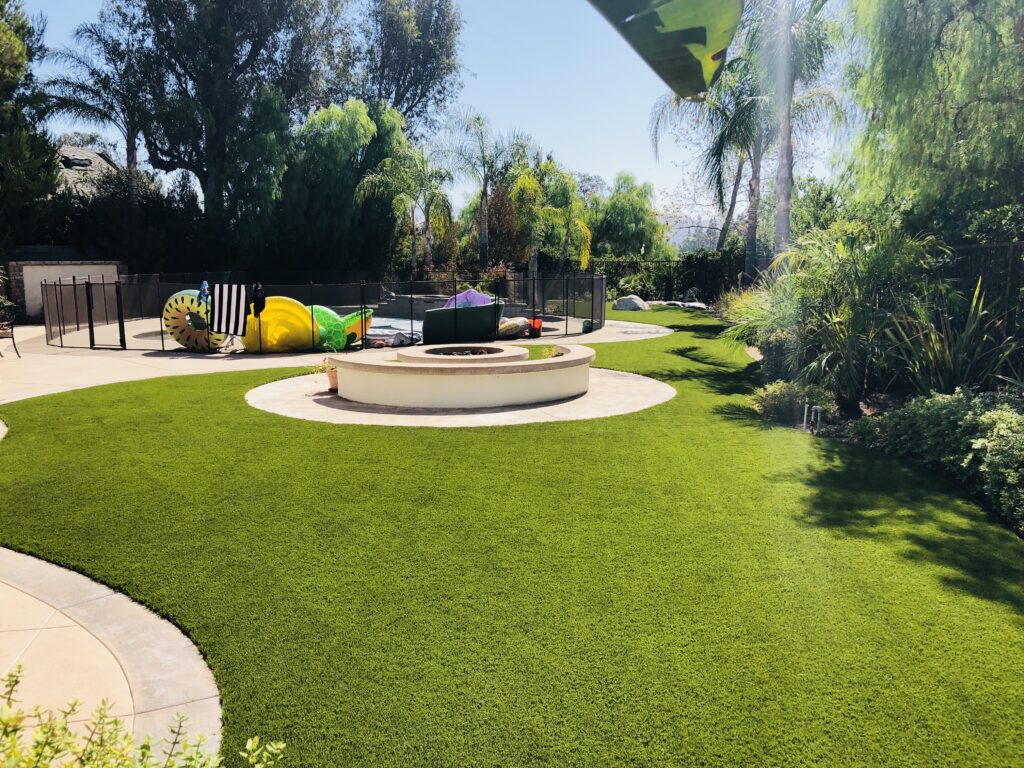
This is the category people don’t think about until they’re living with turf.
Your yard always looks good. Not “pretty good for August.” Not “decent considering the drought.” Always, consistently good. When you pull into the driveway. When guests come over. When you glance out the window in January. Always green, always clean.
No more lawn anxiety. You know the feeling — it rained for a week so the grass grew 6 inches, or you went on vacation and came back to a jungle, or the HOA sent a letter because the lawn looks rough. That mental load disappears.
Mud is gone. If you have dogs or kids, this alone might be worth the investment. No more mud tracked through the house. No more brown footprints on the back porch. No more hosing off the dog before they come inside.
Weekend freedom. Saturday mornings become yours. No alarm for mowing before the heat kicks in. No scheduling around lawn crews. No trips to the hardware store for fertilizer.
The Environmental Angle
Water conservation is a real issue in Texas. The state cycles through drought conditions regularly, and water restrictions are a fact of life in DFW.
A natural lawn uses an estimated 25,000 to 50,000 gallons of water per year in this climate. Artificial turf uses zero irrigation water. For homeowners who care about water stewardship — or who are simply tired of paying for it — turf eliminates the single largest water use on most residential properties.
Beyond water, turf removes the need for fertilizers, pesticides, and herbicides that run off into waterways. It eliminates emissions from gas-powered lawn equipment. It removes the environmental cost of constant lawn maintenance.
The products installed by Green Forever Turf Texas are non-toxic, PFAS-free, lead-free (BAM certified), and heavy metal-free. Safety certifications include IPEMA ASTM, UV testing, and full lab testing. These aren’t the synthetic surfaces of decades past.
The Honest Trade-Offs
Turf isn’t perfect. Here’s what to weigh on the other side.
It Gets Warm in Direct Sun
On a hot summer afternoon — and DFW has plenty of those — turf in direct sunlight is warm underfoot. It’s not dangerous, but it’s noticeable compared to natural grass.
Modern turf products include cooling technology that reduces surface temperature by up to 20% compared to traditional turf. That helps. So does shade — a pergola, trees, or a shade sail over part of the turf makes a big difference.
Most DFW families use their backyards mornings and evenings, not at peak sun. In those hours, turf is comfortable.
It’s a Real Upfront Cost
$8,000 to $15,000 for a typical backyard isn’t nothing. Even with the long-term savings math in your favor, the initial check is real.
Financing options are available through Green Forever Turf Texas. For many homeowners, the monthly payment is less than what they were already spending on lawn care — which means the turf effectively pays for itself from month one.
It Doesn’t Smell Like Fresh-Cut Grass
Some people love that smell. That’s a real thing. Turf smells like nothing, which is mostly a positive (especially for pet owners), but if the scent of a freshly mowed lawn is part of your Saturday ritual, you’ll miss it.
It’s Synthetic
Artificial turf is a manufactured product. It looks natural, it feels good underfoot, and it performs beautifully — but it’s not living grass. Some people care about that distinction. If you feel strongly that your yard should be a living ecosystem, turf may not be for you.
The Credibility Factor
Not every turf company delivers the same result. The installer matters as much as the product.
Green Forever Turf Texas has 19 years in the trade and over 2,500 completed installations. Mark A. Du Pont has 28 years of personal experience in the industry — from Southern California to North Texas.
This isn’t a franchise operation. Mark’s crew works alongside him on every project. Before they leave your property, they make sure you’re completely satisfied and that the work meets and exceeds your expectations.
Every installation carries a 15-year warranty. That’s a commitment to the work, not just a piece of paper.
So, Is It Worth It?
Run the numbers. A typical North Texas homeowner spends more on lawn care over 15 years than the cost of a turf installation — often by a factor of 3x to 6x.
Factor in the time savings — 150+ hours per year — and the water savings, and the answer for most DFW homeowners is clear.
Turf costs more on day one. It costs dramatically less over time. And it gives you something you can’t put a price on: your weekends.
For a fair head-to-head comparison, check out our artificial turf vs real grass breakdown.
Ready to see what artificial turf can do for your yard? Call us at 844-91-GREEN (844-914-7336) or request a free quote.