Not all artificial turf is built for dogs. Standard residential turf looks great, but it wasn’t designed to handle urine, feces, digging, zoomies, and the general chaos that dogs bring to a backyard.
Pet turf is a different product with different specs. If you have dogs — especially multiple dogs — the turf you choose matters more than you might think.
Here’s what separates the best artificial turf for dogs from everything else.
What Makes Pet Turf Different
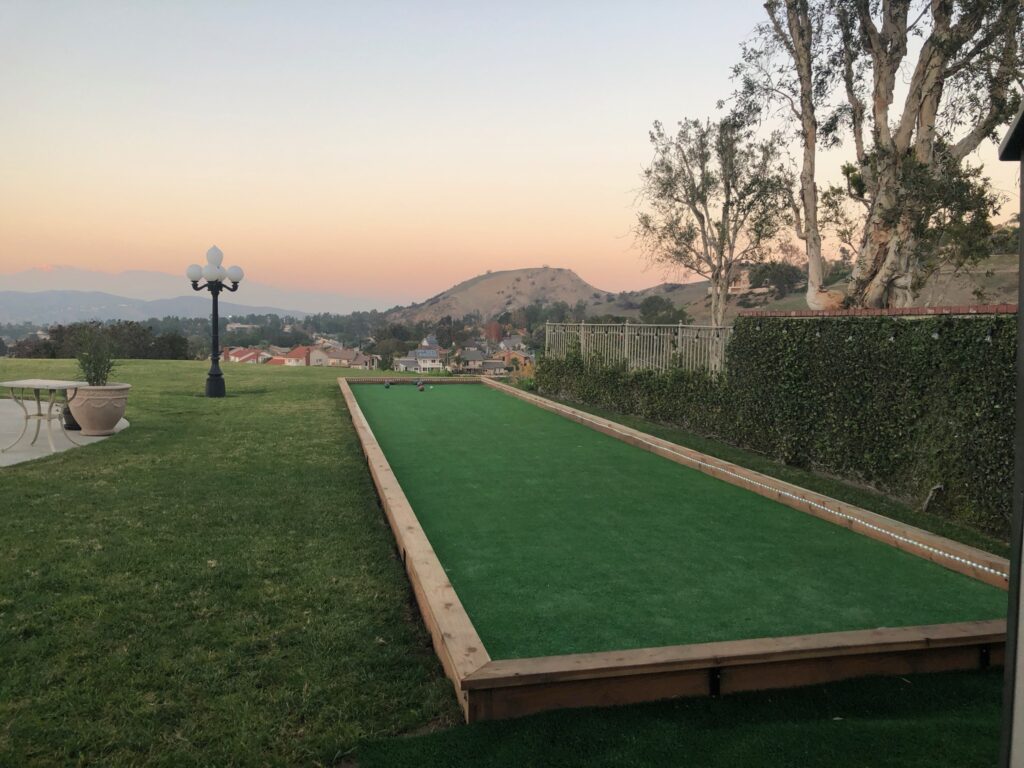
Dog owners need three things from their turf that regular homeowners don’t: fast drainage, odor elimination, and serious durability.
Standard landscape turf typically has a pile height of 1.5 to 2 inches. That’s tall, lush, and great for aesthetics. But taller fibers trap waste, hold moisture, and make cleaning harder.
Pet-specific turf uses a shorter pile height that allows waste to move through faster, dries quicker, and is easier to rinse clean. It’s still soft and comfortable for your dogs to lay on — just engineered for a different purpose.
The infill is the biggest difference. Standard silica sand doesn’t address odor or bacteria. Pet infill does.
The Alpha Pet Pro-Eco: Built for Dogs
At Green Forever Turf Texas, the pet turf product we install is the Alpha Pet Pro-Eco. Here’s why.
409 stitches per square foot with a total face rate of 87. That’s dense. Denser turf holds up better under heavy paw traffic and recovers its shape after being trampled.
Material: PP + PE (polypropylene and polyethylene) blend. No polyurethane backing. This matters because polyurethane can degrade with prolonged exposure to pet urine. PP + PE holds up.
Fully recycled material. The entire product is made from recycled content. If sustainability matters to you, this turf checks that box.
Rated 3+. This indicates heavy-use durability — it’s built to handle the daily wear that dogs put on a surface.
15-year warranty. The same warranty that covers residential turf covers the pet product. This isn’t a lesser product with a shorter lifespan.
The Infill System: Where Odor Dies
The turf fibers handle the surface. The infill handles everything underneath. For pet applications, the infill system is the single most important component.
Zeodorizer
Zeodorizer is a natural pumice stone deodorizer. It’s not a perfume that masks odor — it’s a mineral that absorbs ammonia and neutralizes it at the molecular level.
When urine passes through the turf and contacts the Zeodorizer, the ammonia compounds bind to the pumice stone and are neutralized. The odor doesn’t get covered up. It gets eliminated.
Zeodorizer is non-toxic, natural, and long-lasting. It doesn’t break down or wash away with rinsing.
Antimicrobial Ethanol Sand
Paired with the Zeodorizer, antimicrobial ethanol sand kills bacteria on contact. Where Zeodorizer handles the smell, the ethanol sand handles the germs.
This combination — odor absorption plus bacterial elimination — is what makes the system work. You’re not choosing between clean-smelling turf and sanitary turf. You get both.
Application
Both infill components are applied via a drop spreader for even distribution across the entire surface. This ensures consistent coverage — no hot spots, no missed areas.
The infill settles between the turf fibers and creates a uniform treatment layer. Over time, you’ll top up the infill every 2 to 3 years to maintain its effectiveness.
Drainage for Dog Yards
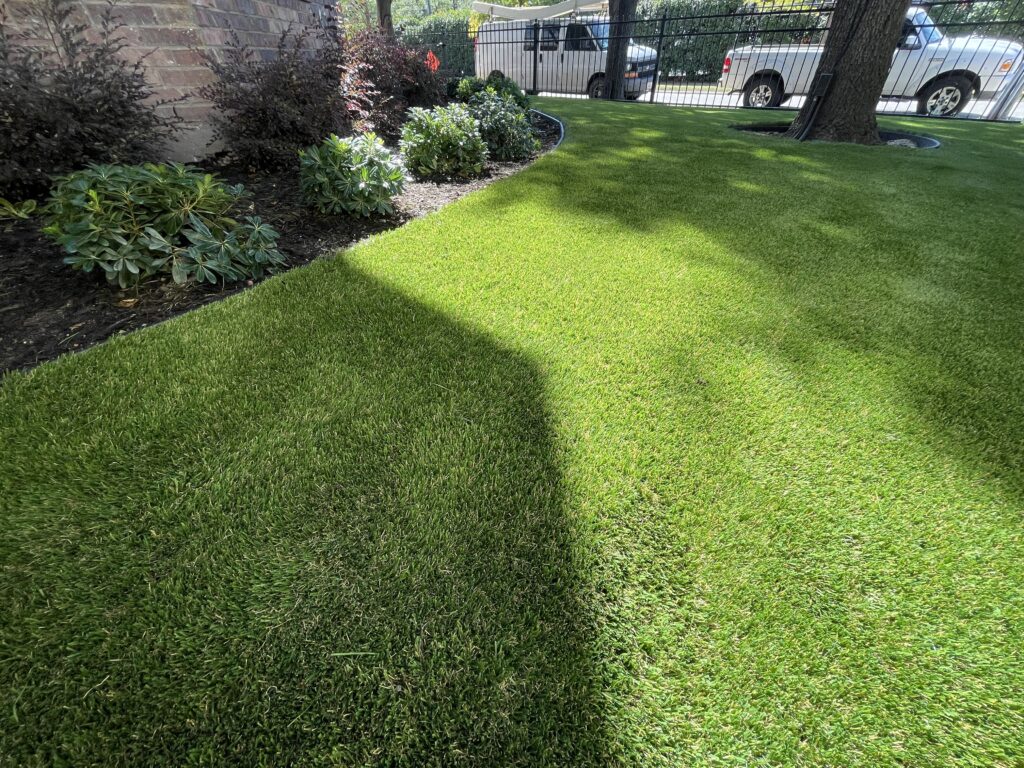
Dogs add liquid to your yard every single day. The drainage rate of your turf determines whether that liquid moves through quickly or sits in the infill layer creating problems.
The Alpha Pet Pro-Eco drains at 400 inches per hour. That’s 8 to 10 times faster than natural grass.
To put that in real terms: when your dog urinates on the turf, the liquid passes through the fibers, moves through the infill (where Zeodorizer and antimicrobial sand treat it), drops through the perforated backing, and enters the base layer below. The entire process takes seconds.
Compare that to natural grass, where urine sits on the surface, soaks into the soil, and creates that unmistakable dead-grass yellow patch that never fully recovers.
With turf, a quick rinse after your dog’s business pushes everything through the system. No yellow spots. No dead patches. No lingering smell.
For a deeper look at how the drainage system works, read our artificial grass drainage explainer.
Safety Certifications: What’s in Your Dog’s Yard
Your dog is rolling on this surface, chewing on it, and breathing next to it all day. Safety matters.
The Alpha Pet Pro-Eco carries these certifications:
Lead-free (BAM certified). No lead in the turf fibers or backing. This is important — some budget turf products still contain lead compounds. BAM certification verifies independent testing.
Heavy metal-free. No cadmium, mercury, or other heavy metals in the product.
PFAS-free. PFAS (per- and polyfluoroalkyl substances) are persistent chemicals found in some synthetic products. This turf is tested and certified PFAS-free.
IPEMA ASTM certified. This certification covers impact attenuation and safety for play surfaces. While it’s designed for children’s play areas, it verifies that the surface meets stringent safety standards.
UV tested. The turf won’t degrade, fade, or release chemicals under prolonged UV exposure — and in Texas, UV exposure is intense.
Lab tested. Third-party laboratory testing verifies all safety claims.
If a turf company can’t tell you specifically what certifications their pet product carries, that’s a red flag. Ask for documentation.
How Many Dogs Can a Pet Turf Yard Handle?
This comes up a lot, especially in DFW where multi-dog households are common.
The short answer: the turf itself doesn’t have a dog limit. The drainage rate handles volume without issue. Three large dogs producing waste daily is well within the capacity of a properly installed pet turf system.
The practical considerations are about maintenance frequency. More dogs mean more waste, which means more rinsing.
One to two dogs: Rinse the primary relief areas 2 to 3 times per week. Pick up solid waste daily.
Three or more dogs: Rinse daily, especially during Texas summers when heat accelerates bacterial growth. Pick up solids twice a day if possible.
Large or giant breeds: The volume of urine per event is higher. This doesn’t overwhelm the drainage — 400 inches per hour handles it easily — but it means more liquid passing through the infill, so more frequent top-ups may be needed.
The infill system does the heavy lifting. As long as you maintain rinsing frequency and top up infill on schedule, multi-dog households work just fine.
Cleaning and Maintenance for Dog Owners in Texas
The Texas heat adds a layer to pet turf maintenance. Here’s the seasonal reality.
Summer (June – September)
Heat accelerates everything — odor, bacterial growth, and decomposition of organic material. This is when your maintenance routine needs to be tightest.
Rinse pet areas daily during peak summer. Early morning or late evening is ideal — the rinse also cools the surface down.
Pick up solid waste as soon as possible. In 100°F heat, waste breaks down fast and can stain the fibers if left sitting.
The Zeodorizer and antimicrobial ethanol sand work harder in summer. You may notice infill levels dropping slightly faster during these months. Check levels in September and top up if needed.
Spring and Fall
These are the easy months. Temperatures are moderate, and the infill system handles odor with less effort. Rinse 2 to 3 times per week. Maintain your normal solid waste pickup routine.
Winter
North Texas winters are mild enough that most dogs are still outside regularly. Maintenance stays consistent — rinsing, waste removal, and the occasional brush.
If you get a hard freeze, let the turf thaw naturally before rinsing. Ice doesn’t damage the turf or infill.
Common Questions From Dog Owners
Will my dog dig through the turf? Quality pet turf is durable enough to resist digging from most dogs. Heavy, persistent diggers can potentially pull at edges or seams, which is why proper edge securing matters during installation. If your dog is a serious digger, reinforce edges with additional staking.
Will turf get hot for my dog’s paws? In direct summer sun, turf warms up. Most dogs self-regulate and stick to shaded areas during peak heat — the same way they would on natural grass or concrete. A quick hose-down cools the surface immediately. Shaded areas stay comfortable throughout the day.
Can puppies use pet turf? Absolutely. It’s safer than natural grass for puppies because there are no fertilizers, pesticides, or herbicides on the surface. The antimicrobial infill is non-toxic. It’s also easier to monitor bathroom habits during housetraining because waste is visible on the surface.
What about dogs that eat grass? Some dogs chew on natural grass as a digestive behavior. They may attempt to chew artificial turf fibers. The materials are non-toxic, but if your dog is a persistent chewer, monitor their behavior during the transition period. Most dogs lose interest once they realize it’s not real grass.
The Right Turf for Your Dogs
Choosing the best artificial turf for dogs comes down to three things: a product built for pet use (not repurposed landscape turf), an infill system that eliminates odor and bacteria (not just masks it), and professional installation with proper drainage.
The Alpha Pet Pro-Eco with Zeodorizer and antimicrobial ethanol sand checks every box. It’s safe, durable, clean, and backed by a 15-year warranty.
For a full overview of the turf maintenance routine — including pet-specific tips — check our maintenance guide.
Ready to see what artificial turf can do for your yard? Call us at 844-91-GREEN (844-914-7336) or request a free quote.