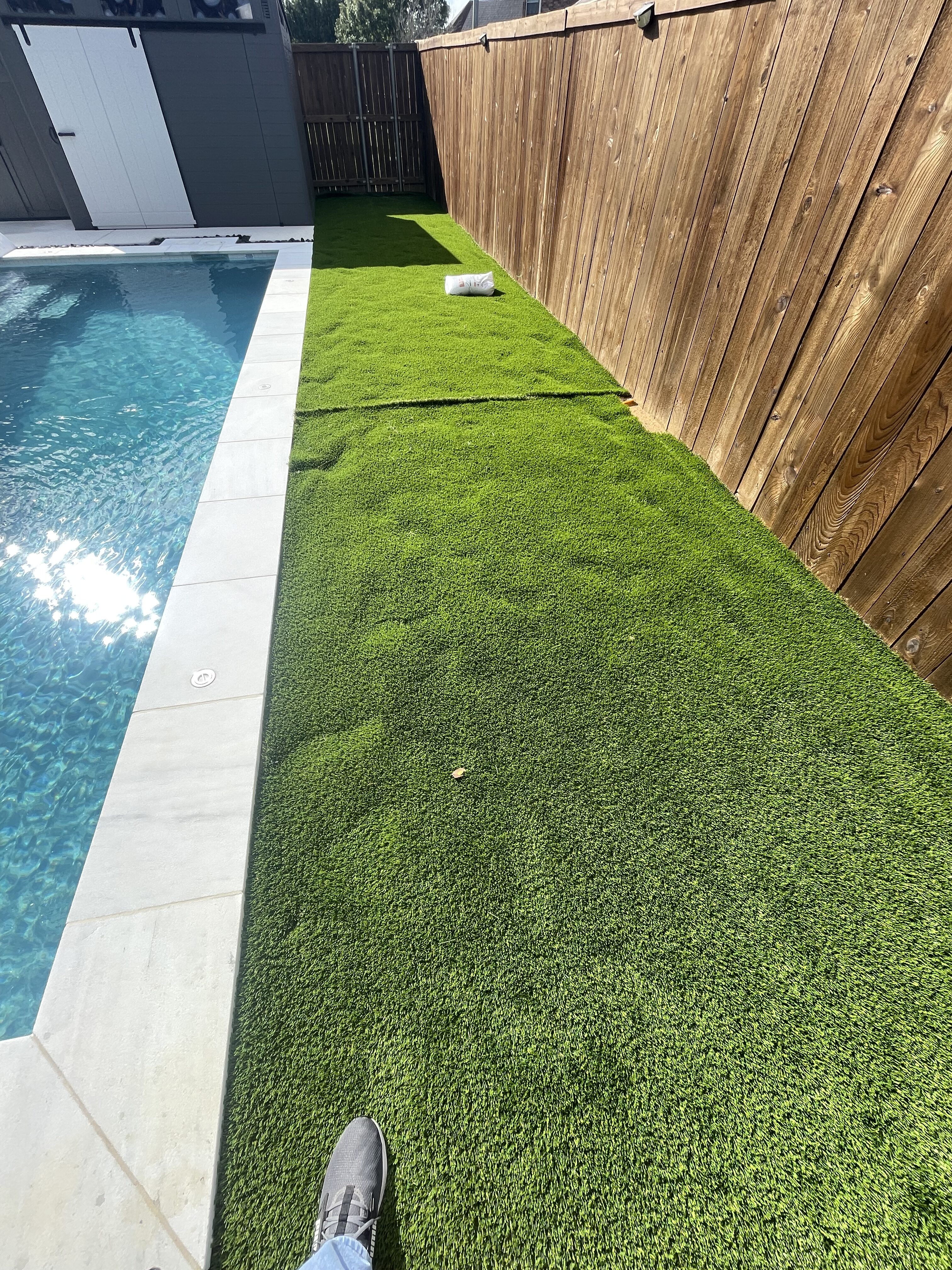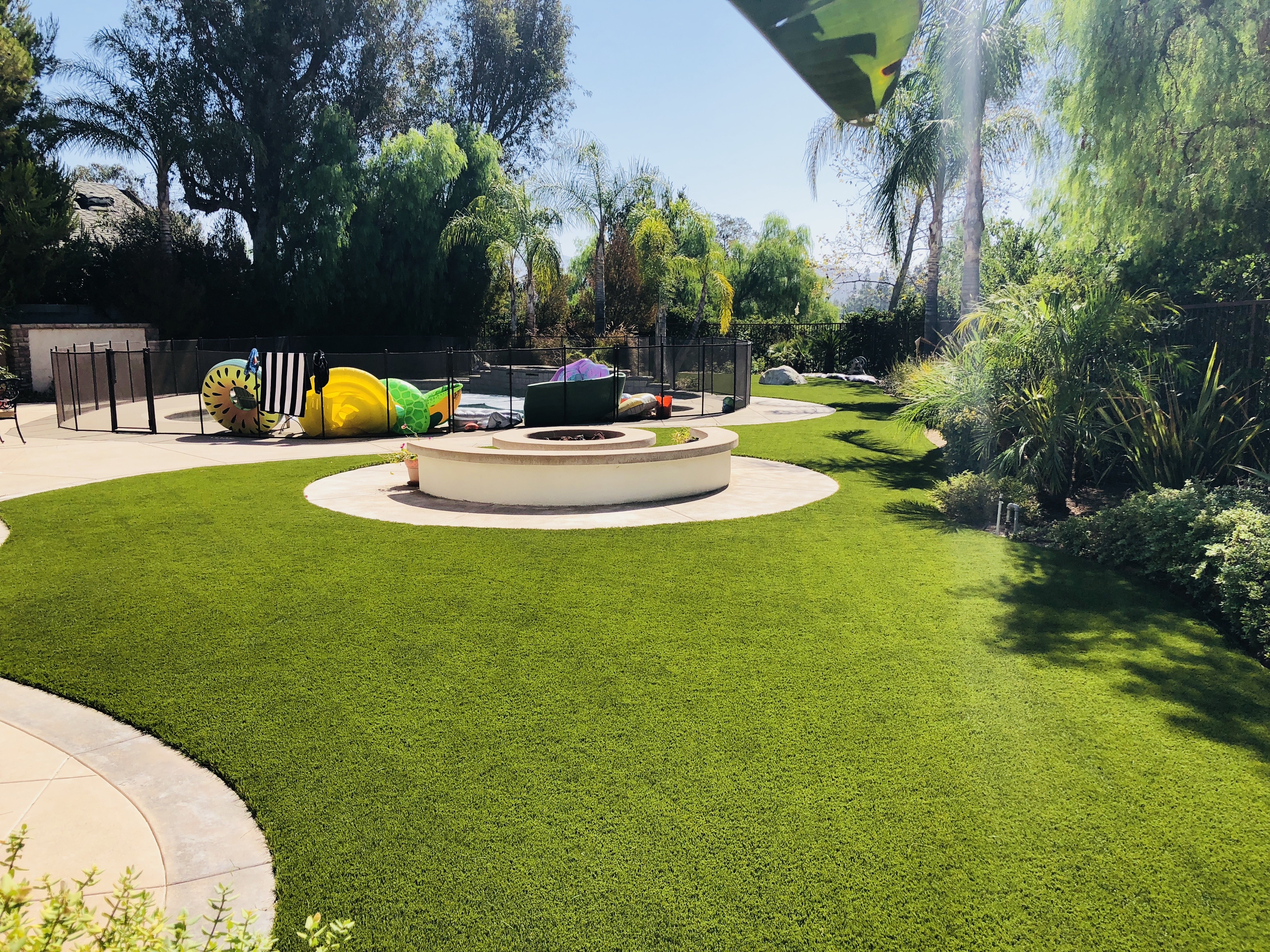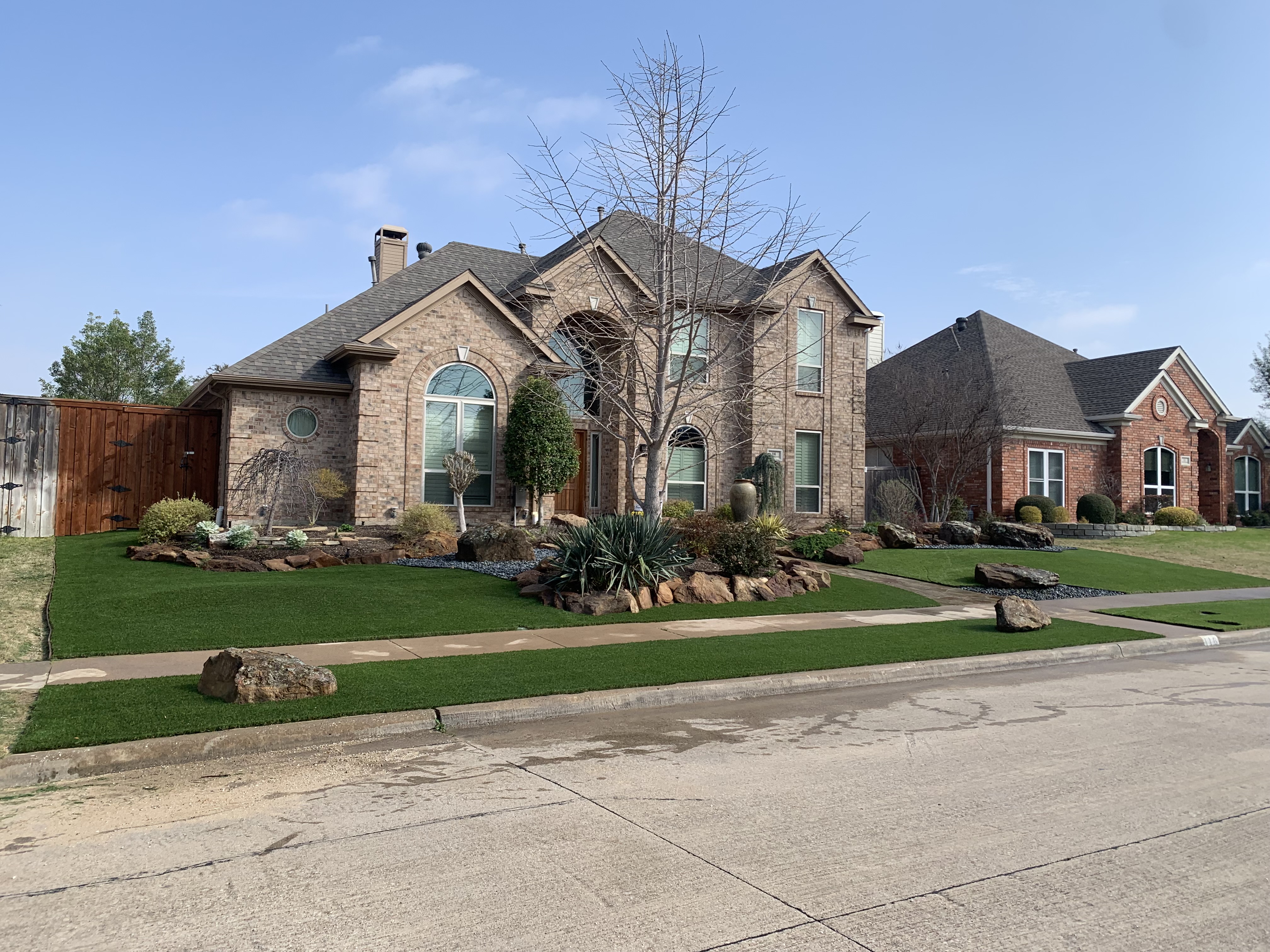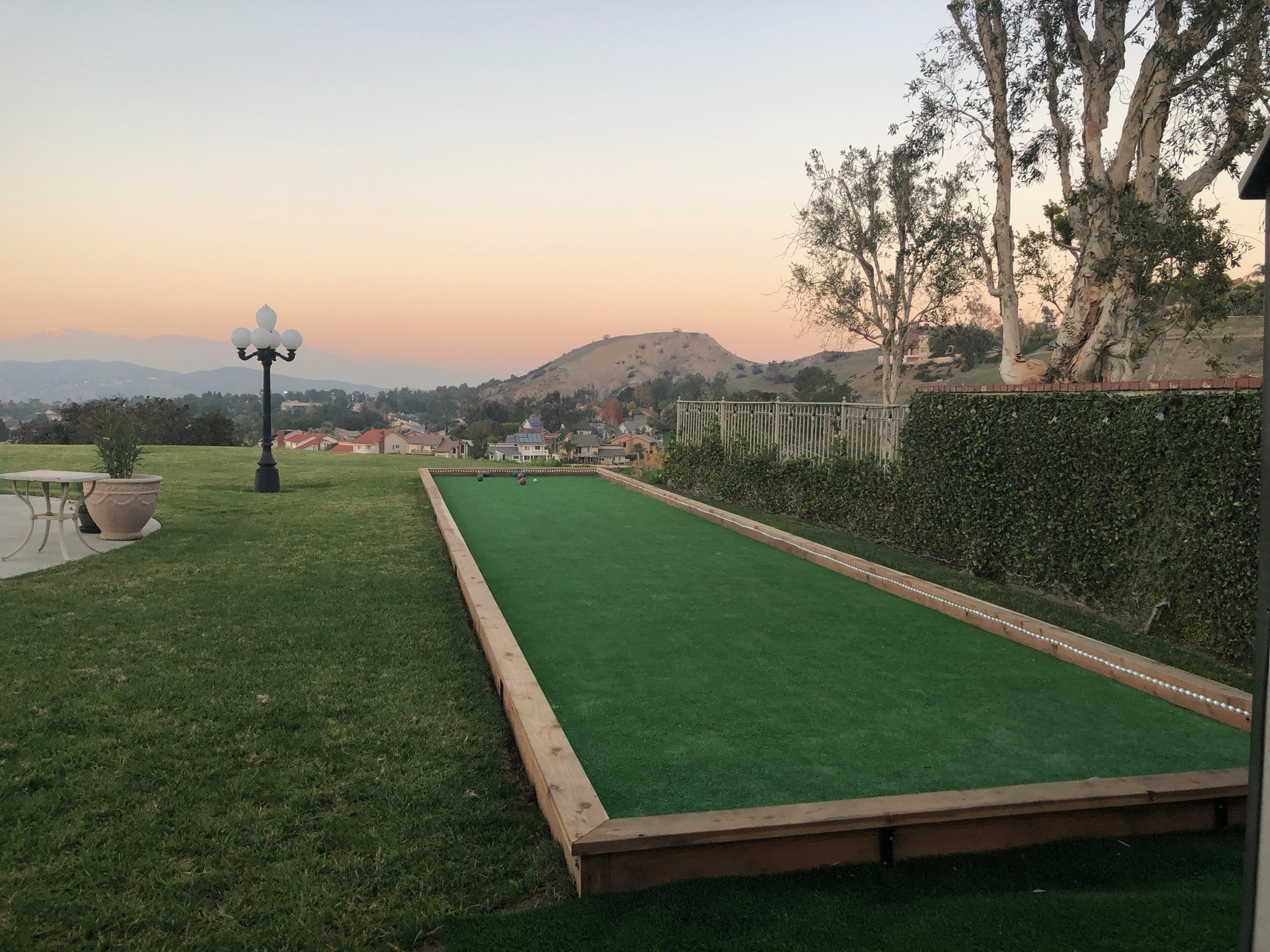
This is the number one concern homeowners bring up before installing artificial turf. Will it flood? Will water pool on the surface? Will my yard turn into a swamp when it rains?
The short answer: a properly installed artificial grass drainage system handles water better than natural grass. And in North Texas — where clay soil makes drainage a constant headache — it’s often a significant upgrade.
Here’s exactly how it works.
The Turf Itself Drains Fast

Modern artificial turf has a perforated backing layer with small holes evenly spaced across the entire surface. Water hits the turf, passes between the fibers, moves through the infill, and drops straight through those perforations into the base below.
The rate? 400 inches per hour. That’s the standard drainage rate for quality turf products.
To put that in perspective, the heaviest rainfalls North Texas sees — those intense spring and summer downpours — dump about 2 to 4 inches per hour at peak intensity. The turf backing alone can handle 100 times that volume.
The turf surface itself is never the drainage bottleneck.
The Base Layer Does the Real Work
Water passes through the turf quickly. The question is: where does it go from there?
That’s the base layer’s job. Under every quality turf installation sits a crushed rock or decomposed granite base, typically 2 to 3 inches thick. This layer serves two functions: it provides a stable, compacted surface for the turf to sit on, and it creates a drainage channel that moves water laterally toward the natural drainage path of the yard.
Crushed rock has excellent permeability. Water moves through the gaps between stones and either absorbs into the native soil below or flows toward the graded low point of the installation.
The grading — the slight slope engineered into the base during installation — is what directs the water. Standard grading runs about 1% to 2%, which means the surface drops roughly 1 inch for every 8 to 10 feet. You can’t see it, but the water follows it every time.
This is why professional installation matters. The base layer and grading are the entire drainage system. Get them right, and water management takes care of itself. Cut corners here, and you’ll have problems that no amount of surface work can fix.
Clay Soil: The Real Drainage Enemy in DFW
Here’s something most national turf guides don’t address: clay soil changes the drainage equation.
Most of North Texas — Denton, Frisco, Plano, McKinney, Fort Worth, Dallas, Flower Mound, Prosper — sits on heavy clay. Clay soil is dense, holds water, and drains slowly. When it’s saturated, it doesn’t absorb any more water. It just sits there.
If you’ve ever watched your Bermuda grass yard pool water during a heavy rain, that’s clay at work. The grass isn’t draining poorly — the soil underneath it is.
Here’s the counterintuitive truth: a properly installed artificial turf system on clay soil drains better than the natural grass it replaced.
Why? Because the installation process replaces the top 3 to 4 inches of clay with an engineered base layer that actually moves water. Instead of rain hitting grass and immediately pooling on clay, rain hits turf, drops through the backing, enters the crushed rock base, and flows along the graded path.
The engineered base doesn’t eliminate the clay below it. But it creates a drainage layer above the clay that the natural setup never had. In heavy rains, water moves through the base layer and exits the yard before the clay below it even becomes a factor.
What Happens During a Heavy Texas Storm
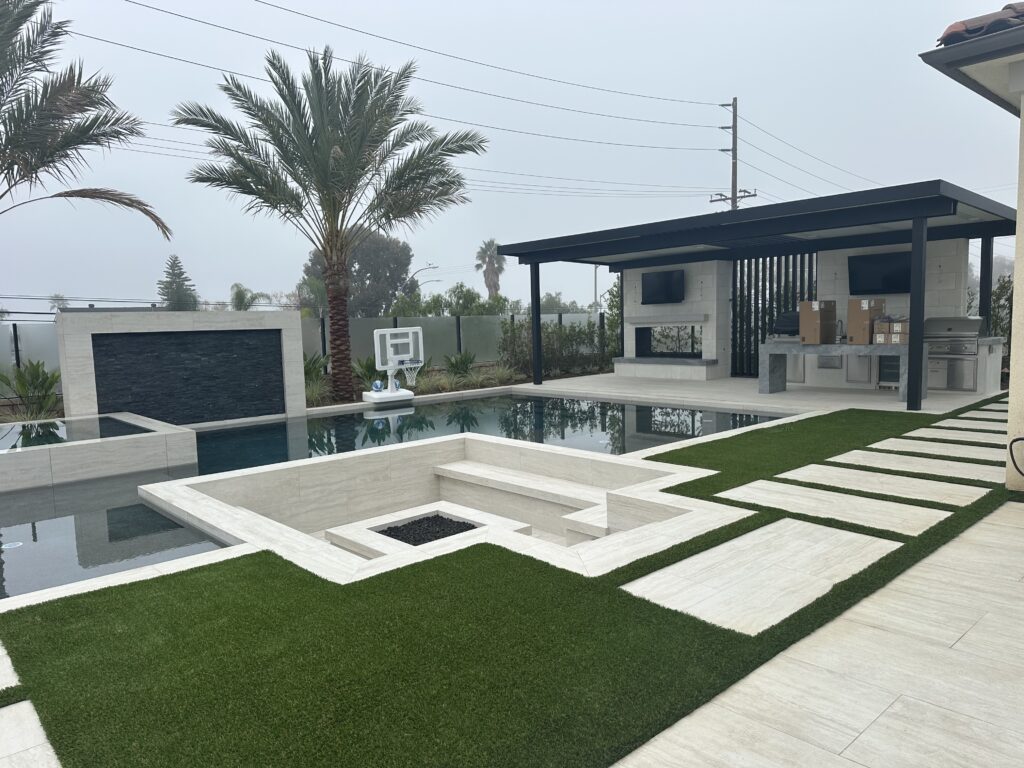
Picture a typical DFW thunderstorm. Two inches of rain in 45 minutes. Wind. Lightning. The kind of storm that turns real grass yards into temporary ponds.
On an artificial turf yard:
- Rain hits the turf surface.
- Water passes through the perforated backing within seconds — at a rate of 400 inches per hour, that 2 inches moves through almost instantly.
- Water enters the crushed rock base layer.
- The graded base directs water toward the yard’s low point or drainage exit.
- Water either absorbs into the subsoil over time or exits through the drainage path.
The surface stays dry. No standing water. No muddy footprints tracked into the house. No waiting three days for the yard to dry out before you can use it.
Compare that to natural grass on clay soil, where that same storm creates puddles that stick around for hours — sometimes days — and leaves the yard spongy and unusable.
Pet Areas and Drainage
If you have dogs, drainage is doubly important. Pet waste introduces liquids and bacteria into the turf surface. You need that waste to move through the turf quickly and not sit in the infill layer.
Quality pet turf installations use the same 400 inches per hour drainage rate plus specialized infill that addresses odor and bacteria directly.
Zeodorizer — a natural pumice stone deodorizer — absorbs ammonia and neutralizes odor. Antimicrobial ethanol sand kills bacteria at the source. Together, they handle the organic side of pet waste while the drainage system handles the liquid.
Regular rinsing pushes pet waste residue through the turf and into the base layer. Because the drainage rate is so high, that rinse water moves through almost instantly. There’s no pooling, no soaking, and no lingering smell.
For multi-dog households, drainage capacity matters even more. The good news is that the 400 inches per hour rate is so far beyond what any residential situation demands that even a yard with three or four large dogs drains without issue.
Signs of a Drainage Problem
If your turf was installed correctly, you shouldn’t see drainage issues. But if you do, here’s what to look for and what it usually means.
Standing water on the surface after rain. This almost always points to a grading issue in the base layer. Water needs somewhere to go, and if the grade doesn’t direct it, it sits. The fix involves adjusting the base grade — sometimes a small area, sometimes a more significant rework.
Soft or spongy spots. This usually means the base layer wasn’t compacted properly in that area, and water is sitting in the rock instead of moving through it. Compaction is the fix.
Odor in pet areas despite proper infill. If drainage is working, odor shouldn’t be an issue. If you’re smelling ammonia, the waste liquid isn’t moving through the system effectively. This can mean the infill needs a top-up or the drainage rate has slowed due to debris buildup in the backing perforations. A thorough rinse and infill refresh usually solves it.
Weeds growing through the turf. This isn’t technically a drainage problem, but it’s related. Standing moisture in the infill layer creates conditions where wind-blown seeds can germinate. Better drainage and regular debris removal prevent this. Our installations include commercial-grade weed barrier and Venix chemical treatment to keep weeds from establishing from below.
Drainage Myths
Myth: Artificial turf causes drainage problems. Reality: Turf drains faster than any natural surface. The 400 inches per hour rate far exceeds what natural grass can handle.
Myth: You can’t install turf in a low-lying yard. Reality: You can. It requires proper grading and potentially a French drain or channel drain to direct water, but turf works in low spots. In fact, turf in a low area often performs better than grass because the base layer provides drainage the native soil can’t.
Myth: Turf pools water against the house. Reality: Only if it’s graded incorrectly. Proper installation always grades away from the house — which is the same requirement for any landscaping surface, natural or artificial.
It’s an Engineering Question, Not a Product Question
Drainage isn’t about the turf. It’s about what’s underneath it. Quality turf products all drain at high rates through their perforated backing. The difference between a yard that drains perfectly and one that doesn’t comes down to base prep, grading, and compaction.
That’s the work you’re paying for when you hire a professional installer. Green Forever Turf Texas has completed over 2,500 installations across North Texas, and proper drainage is built into every one.
Ready to see what artificial turf can do for your yard? Call us at 844-91-GREEN (844-914-7336) or request a free quote.